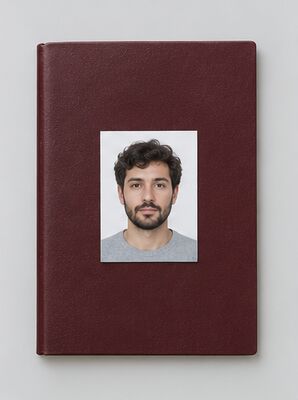
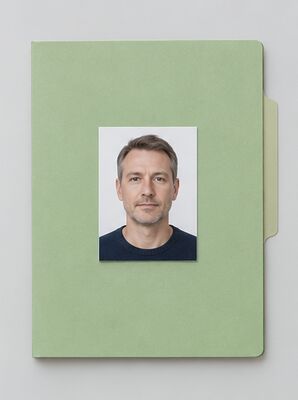
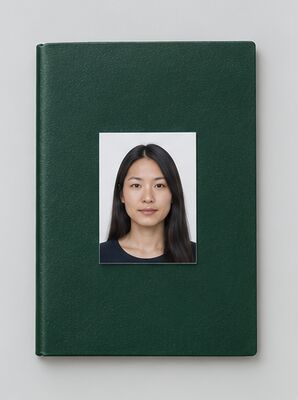
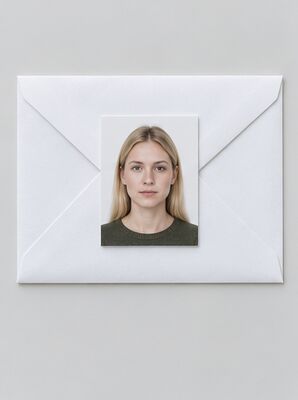
Last updated: June 13, 2026 · Reviewed by Jack Woo, Senior Travel Documents Specialist
Free, fast, and compliant with official requirements
| Size | 35 x 40 mm |
| Resolution | 600 DPI |
| Background color |
White background
|
| Official links | https://www.ica.gov.ae |
The Emirates ID card is the mandatory UAE ID document issued by the Federal Authority for Identity, Citizenship, Customs and Port Security (ICP), formerly named the Federal Authority for Identity and Citizenship (ICA). Every UAE citizen and resident must hold one, and for expatriates the card is issued alongside the UAE residence visa. Both require a photo that satisfies ICP's ICAO-aligned specifications. The ICP FAQ confirms that Emirates ID photo requirements include a white background, a photo no more than six months old, and full ICAO compliance. Images falling outside the approved standards are not accepted at submission.
The UAE ID photo size and format specifications in the table below come directly from ICP's official published standards.
| Specification | Requirement |
|---|---|
| Width | 35–40 mm (official range) |
| Height | Not stated in official source (see note) |
| Background | White |
| Face coverage | 70–80% of the photograph |
| Maximum photo age | 6 months |
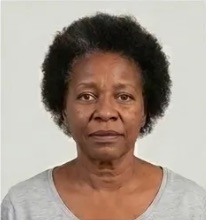
| Expression | Neutral; mouth closed |
| Eyes | Open and clearly visible |
| Head orientation | Square-on to camera; both edges of face visible |
| Lighting | Uniform; no shadows, flash reflections, or red-eye |
| Colour | Natural skin tones; appropriate brightness and contrast |
| Print quality | High-quality photo paper; high resolution |
Note on height: The ICP Personal Photo Specifications PDF specifies a width of 35–40 mm but does not publish a separate height figure. Secondary documentation lists heights of either 40 mm or 45 mm, but neither appears in the official document. Prepare a photo with the face filling 70–80% of the frame.
The ICP Personal Photo Specifications follow ICAO biometric standards, and ICP's FAQ confirms that every submitted photo must comply with ICAO. The specified width range of 35–40 mm defines the print area for the card's facial capture zone. A face occupying 70–80% of the photograph gives the biometric system sufficient resolution to match identity across government services. The white background requirement removes shadow and tonal interference that coloured or patterned surfaces introduce into facial recognition. High-resolution printing on photo-quality paper preserves the fine facial detail needed through the card-production process. The six-month age limit ensures the recorded image reflects the cardholder's current appearance. These UAE Emirates ID photo requirements apply equally to residence visa photo submissions processed through the same ICP system.
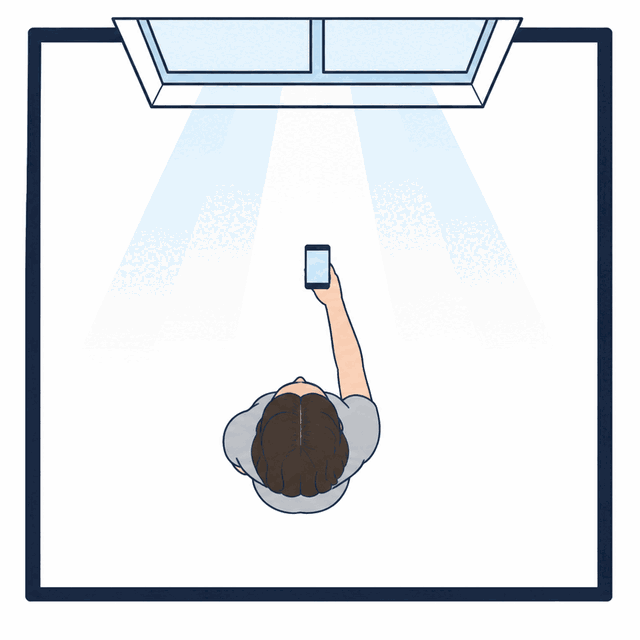
Lighting. Natural daylight near a large window works well. Position the light in front of you so it falls evenly across your face. Avoid standing with a window or lamp directly behind you, as that creates a dark face against a bright background and will cause rejection.
Background. Stand against a plain white wall or drape a flat white sheet behind you. Before shooting, check the frame corners for shadows or any patches that read as grey or cream.
Camera height. Hold the phone at eye level. Pointing the camera upward or downward shifts facial proportions and can alter the apparent tilt of the eyes.
Framing. Centre your face in the shot. Include the top of the head with a small gap above, and bring the top of the shoulders into the frame.
Expression. Look directly at the camera. Keep your expression neutral, mouth closed, and both eyes fully open.
Final check. Review the image at full size before uploading. Discard any shot with motion blur, uneven lighting, or a shadow falling across the face. Having another person hold the phone tends to produce a steadier result than a selfie.
Blurred or pixelated. ICP requires sharp focus and clear image quality. Soft focus and pixelation make biometric features unreadable.
Too dark or too light. Appropriate brightness and contrast are specified requirements. Either extreme hides the facial structure needed for identity verification.
Washed-out colour or unnatural skin tones. The photo must be colour-neutral and show natural skin tones. Heavy filtering and colour correction shift tone values outside acceptable limits.
Shadows or reflections on the face. ICP explicitly lists shadows across the face, shadows behind the head, flash reflections on skin, and red-eye as rejection causes. Uniform front lighting eliminates all four.
Subject too far or too close. The face must fill 70–80% of the photograph. Too much distance leaves the face too small; too close and facial features are cropped at the edges.
Looking away or portrait-style pose. The subject must face the camera square-on with both edges of the face visible. Looking over one shoulder (portrait style) and tilted eyes are both listed rejection causes.
Eyes closed or obscured. Eyes must be open and clearly visible with no hair crossing them. Partially closed or downward-cast eyes result in rejection.
Coloured or patterned background. The background must be white. Patterns, shadows, or any non-white surface visible behind the subject cause rejection.
Subject not centred. ICP lists an off-centre composition as a rejection cause.
Other people or objects visible. The photo must show only the applicant. Visible chair backs, objects near the face, additional people in the frame, and an open mouth all cause rejection.
Glasses problems. ICP rejects photos where lenses are tinted, where flash creates glare on the lenses, or where frames cover any part of the eyes. Lighter frames are preferred over heavier ones.
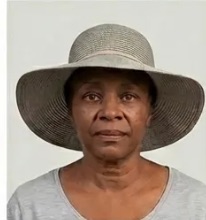
Non-religious head covering. Hats and caps are not permitted. Religious head coverings are accepted only when all facial features from chin to forehead and both edges of the face are clearly visible.
Ink marks or creases. Physical damage to a printed photo is a rejection cause. Handle printed photos by the edges only.
Photo identical to the existing card. When renewing or updating an Emirates ID, ICP requires the submitted photo to differ from the photograph currently printed on the card.
Meeting UAE Emirates ID photo requirements means satisfying several technical conditions at once. Here is how the main preparation options compare:
| Option | Cost | Time | Approval likelihood | Convenience |
|---|---|---|---|---|
| iShotAPhoto | Low | Quick | High when AI check passes | Any device, any time |
| Pharmacy or print kiosk | Low to moderate | Quick | Varies; no automated spec check | Widely available across the UAE |
| Professional photo studio | Premium | Moderate | High when studio knows ICP requirements | Requires appointment or travel |
| Photo booth | Low | Quick | Varies by booth calibration | Limited locations |
Costs and times vary by region.
ICA to ICP. The Emirates ID issuing authority was formerly called the Federal Authority for Identity and Citizenship (ICA), operating at ica.gov.ae. It is now the Federal Authority for Identity, Citizenship, Customs and Port Security (ICP), at icp.gov.ae. Both names refer to the same authority. Older printed guides and some web links still use the ICA name or domain.
Application channels. ICP's FAQ confirms four submission options: the ICP Smart Application, the official ICP website, authorised typing offices, and in-person ICP Customer Happiness Centers. Cases requiring fingerprint or biometric data collection need a biometric appointment at an ICP Customer Happiness Center.
Emirates ID renewal. ICP recommends beginning renewal at least 30 days before the card's expiration date to avoid a late penalty. The fine is AED 20 per day of delay, up to a maximum of AED 1,000. A photo submitted during renewal must meet current ICP specifications, be no more than six months old, and not be identical to the photograph on the existing card.
UAE residence visa requirements. UAE law requires a sponsor (an employer, a UAE national, or an educational institution) for most residence visa applications. Applicants for green, blue, or golden visas are exempt from the sponsorship requirement. Expatriate applicants aged 18 and above must undergo a medical fitness test as part of the residence process.
Application tracking. ICP's FAQ confirms that applications can be monitored through a personal account on smartservices.icp.gov.ae or by contacting the ICP Call Centre.
Glasses. ICP permits glasses in Emirates ID photos under specific conditions: eyes must be fully visible, lenses must be clear and untinted, frames must not cover any part of the eyes, and there must be no flash reflection on the lenses. Lighter frames are preferred. Remove glasses before the photo if these conditions cannot be reliably met.
Religious head coverings. ICP accepts head coverings worn for religious reasons, provided that facial features from the bottom of the chin to the top of the forehead, and both edges of the face, are clearly visible. A garment that covers the lower face does not satisfy this requirement and would be rejected.
Hats and caps. These are explicitly listed in the ICP specification as a rejection cause and must be removed before the photo is taken.
What are the Emirates ID photo size requirements?
The ICP Personal Photo Specifications specify a width of 35–40 mm. This is a range, and the official document does not state a height separately. Secondary documentation lists heights of 40 mm or 45 mm, but neither figure appears in the official PDF. Prepare a photo with the face filling 70–80% of the frame.
What colour should the Emirates ID photo background be?
White. The ICP official FAQ specifies a white background, and the ICP ICAO guidelines document calls for a plain light-coloured background, with sample images showing white. Cream, grey, and off-white will cause rejection.
What are the UAE ICP photo requirements for facial coverage?
ICP requires the face to fill 70–80% of the photograph. The shot should capture the head and top of the shoulders, with the full forehead and both edges of the face clearly shown.
How long is an Emirates ID photo valid for submission?
The photo must be no more than six months old at the time of submission.
Can I wear glasses in my Emirates ID photo?
Yes, with conditions. ICP's specifications require eyes to be fully visible, lenses to be clear and untinted, frames to not cover the eyes, and no flash reflection on the lenses. Lighter frames are preferred. Remove the glasses if those conditions cannot be met.
Can I wear a headscarf or hijab in my Emirates ID photo?
Yes, for religious reasons. ICP permits religious head coverings as long as facial features from chin to forehead and both edges of the face remain clearly visible.
How do I change the photo on my Emirates ID?
Photo updates are submitted through the same ICP channels as any other amendment: the Smart Application, the ICP website, authorised typing offices, or in person at a Customer Happiness Center. Cases requiring biometric data collection need an appointment at an ICP Customer Happiness Center. The replacement photo must not be identical to the one currently on the card and must meet all current ICP specifications.
What are UAE residence visa photo requirements?
UAE residence visa applications processed through ICP use the same ICAO-aligned photo standard: white background, face filling 70–80% of the frame, neutral expression, mouth closed, and a photo no more than six months old. The Emirates ID and residence visa applications are handled together for most applicants through ICP's channels.
What happens if I miss my Emirates ID renewal deadline?
ICP applies a fine of AED 20 per day of delay, up to a maximum of AED 1,000. ICP recommends starting the renewal process at least 30 days before the card expires.
How do I apply for or renew my Emirates ID?
ICP's FAQ lists four channels: the ICP Smart Application, the official ICP website (Smart Services portal at smartservices.icp.gov.ae), authorised typing offices, and ICP Customer Happiness Centers. Applications that include biometric data collection require an in-person appointment at a Customer Happiness Center.