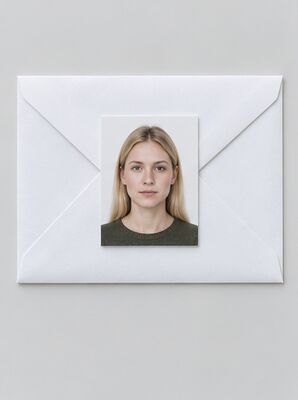
Why the visa photo matters
A Japan visa lets foreign nationals enter Japan for tourism, family visits or short business stays. The visa application checklist from the Ministry of Foreign Affairs of Japan lists one photograph as a mandatory document, next to a valid passport and the completed visa application form. The visa photo looks like a small detail, but a photo in the wrong size or with a grey background can delay the whole application. Japanese photo rules are consistent on background, colour, recency and how the visa photo is attached; only the photo size changes from one Japanese consulate to another.
Visa photo size by Japanese consulate
Japan does not publish one national photo size for every visa. The Ministry of Foreign Affairs says requirements may vary with the local situation and the purpose of the visit, and sends applicants to the embassy or consulate of Japan that has jurisdiction over their country. These are the visa photo sizes published by Japanese missions:
For other countries, the website of the Japanese embassy or consulate for your region lists the visa photo size that applies to you. Check it before you print, because a photo that fits one consulate of Japan does not automatically fit another.
Why one photo size does not fit every consulate
The difference between these sizes is easy to miss. A 2 × 2 inch photo is about 50.8 × 50.8 mm, so a print made for the Japanese consulate in Denver is larger than the 45 × 45 mm visa photo the Mumbai consulate asks for. The 4.5 × 3.5 cm size used in Melbourne and by the Embassy of Japan in the Philippines is not square at all. Our default visa photo template is the 45 × 45 mm square with a head size of about 34 mm and about 4 mm of space above the head. If your consulate publishes a different photo size, pick that size in the online visa photo maker before you download, and the AI crops the same photo to the new frame.
Background, colour and recency
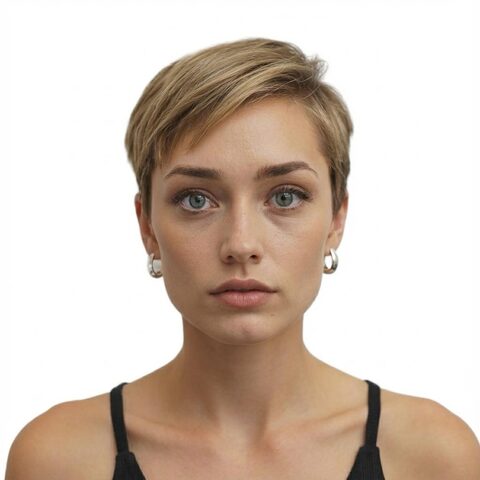
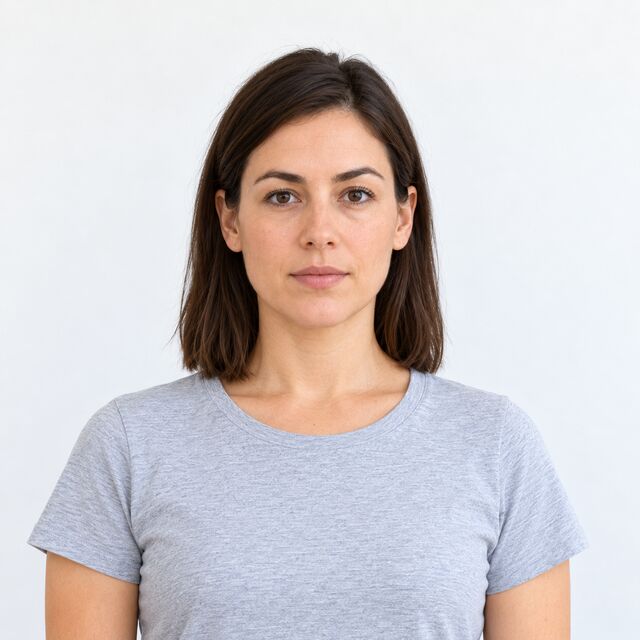
The Japanese consulate in Mumbai states that the visa photo must have only a white background, and that photos with dark, busy or patterned backgrounds will not be accepted. A plain white background lets your face show clearly. The visa photo must be in full colour. Both the Consulate-General of Japan in Denver and the Embassy of Japan in the Philippines require a photo taken within the past six months, so an older photo from a previous trip to Japan does not meet the standard even if the size is right.
Paper applications: printing and gluing the visa photo
If you submit a paper Japan visa application at a consulate, print the visa photo at 300 DPI and cut it to the exact size. The Consulate-General of Japan in San Francisco asks for prints on photo paper, not standard printer paper, and the difference in finish is visible on inspection. The Consulate-General of Japan in Melbourne and the Embassy of Japan in the Philippines both say the visa photo must be glued to the form; stapling or taping is not permitted. Use a thin layer of glue so the photo lies flat and does not wrinkle.
Japan eVisa photo
The Ministry of Foreign Affairs of Japan runs an eVisa system for eligible nationalities, so qualifying applicants can apply online without visiting a Japanese consulate in person. For the Los Angeles Consulate General's eVisa channel, the short-term visit checklist asks for a visa photo that faces forward, was taken within six months on a plain white background, was not altered by photo apps, and shows a clear face that is not blurry or pixelated. The checklist does not list a pixel size or file size for the digital upload; the eVisa portal shows the current upload rules, so check them before you submit your visa photo online. Our online maker gives you a digital photo file that you can upload, and the same photo can be printed for a paper form. Check which visa route your consulate uses before you prepare the photo: an online eVisa needs a digital file, while a paper visa application needs a print in the right size.
Selfies and home photos
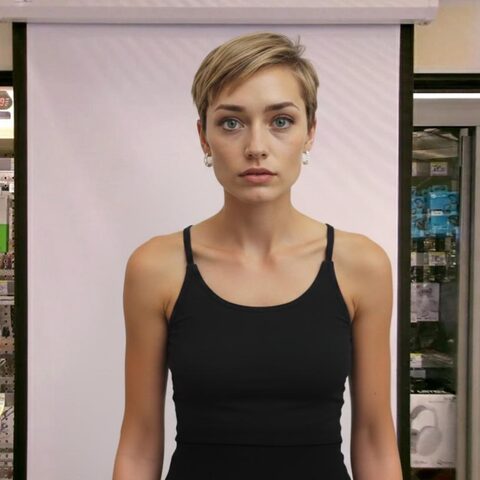
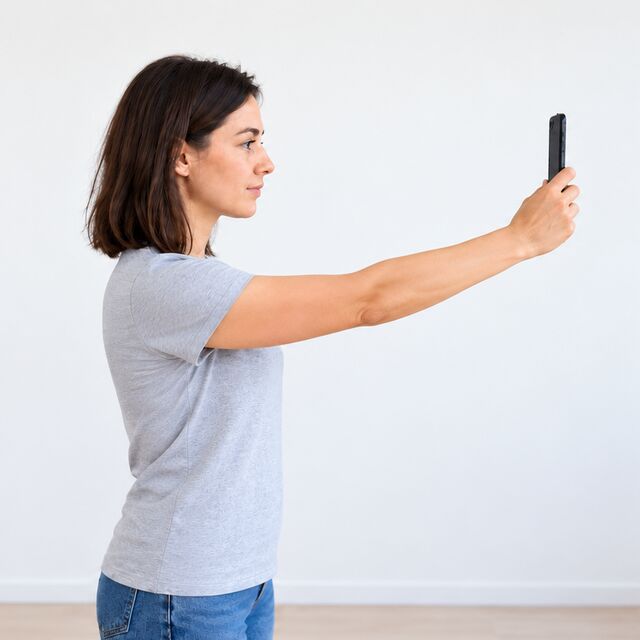
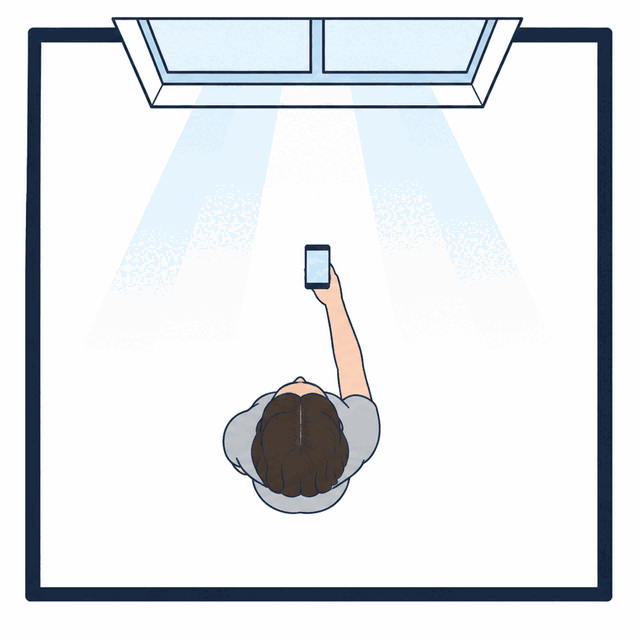
The Consulate-General of Japan in Chicago says most selfies and self-printed photos are rejected because of poor quality. Phone selfies often lack even lighting and enough resolution, and the wall behind you is rarely a true plain white. A phone photo can still work when you control these things: face a window, stand in front of a plain wall, hold the camera at eye level, or ask someone else to take the photo. Our online tool then fixes the crop, size and background and checks the visa photo before you print it on photo paper.
How to take a visa photo for Japan with a phone
- Face a window. Let daylight fall evenly across your face. A light source behind you creates a silhouette and casts shadows onto the background of the photo.
- Use a plain white background. Stand against a white wall or hang a white sheet behind you. Texture, patterns or a cream tone show up in the visa photo.
- Ask another person to hold the camera. It gives better framing than a selfie and avoids the arm distortion of self-taken photos.
- Hold the camera at eye level. Tilting the phone up or down distorts facial proportions.
- Keep a neutral expression. Look at the lens with both eyes open and your mouth closed.
- Review the photo. Check for shadows, hair across your forehead or cheeks, and a background that looks off-white rather than true white.
Where to get a visa photo for Japan
You can have a visa photo taken at a professional photo studio, a pharmacy or superstore kiosk, an automated photo booth, or at home with a smartphone and an online tool. A studio familiar with the requirements of Japanese consulates usually gets the photo right, but it may need an appointment and usually costs more. Kiosks and booths are quick, but they may not offer the photo size of your consulate, and the background and calibration differ from machine to machine. An online visa photo maker is free, works at any time from home, and lets you choose the exact size. Whichever option you use, confirm that the photo size matches the specification of the consulate handling your visa, not a generic passport size.
Glasses
The Japanese consulate in San Francisco explicitly prohibits glasses in the visa photo, so applicants in its jurisdiction should remove all eyewear, corrective glasses and sunglasses alike. Other consulates of Japan have not all published the same rule, but taking your glasses off avoids reflections and is the safer choice everywhere. Contact lenses do not show in a photo.
Do you need a Japan visa at all?
Passport holders of some countries and regions do not need a visa for stays in Japan of 90 days or less; the Ministry of Foreign Affairs publishes the full list of exempt nationalities, and the Japan National Tourism Organization explains the rules on japan.travel. Processing of a Japan visa generally takes around five business days, though it depends on the consulate and the number of applications. If you later need a photo for a document issued in Japan, see our residence card photo page or the My Number Card photo page.
Visa photo checklist for Japan
- Photo size that matches your consulate: 45 × 45 mm, 35 × 45 mm, 2 × 2 inches or 4.5 × 3.5 cm.
- Plain white background, no shadows, gradients or patterns.
- Full colour visa photo taken within the past six months.
- Face to the camera, neutral expression, both eyes open, mouth closed.
- No glasses and no photo app filters.
- Printed on photo paper and glued, not stapled, for paper forms.