What a German residence permit is
A Germany residence permit (Aufenthaltserlaubnis) is the official document that lets citizens of countries outside the EU live in Germany for a specific purpose, such as work, study, family reunification or humanitarian reasons. You need one if you plan to stay in Germany for more than 90 days, and it serves as proof that you live in the country legally. The permit is usually issued for a limited time. It can be extended, and under certain conditions it can be converted into permanent residence, the Niederlassungserlaubnis.
For many people who move to Germany, the permit is the most important document they hold after their passport. German employers, landlords, banks and universities ask to see it, and the German authorities check it whenever you deal with them. That is why it pays to get every part of the application right the first time, and the photo is one of the parts that people most often get wrong.
The eAT card and its photo
Germany issues the permit as an electronic card, the elektronischer Aufenthaltstitel or eAT. Your photo is printed on this card and stays on it for as long as the card is valid, so the photo you bring to the appointment is not a formality. The application asks for a recent biometric photo that meets the official specifications, and a photo that is blurry, too dark or cropped in the wrong way does not meet them. Getting it right before the appointment saves you from booking another one just for a new photo.
Photo size explained
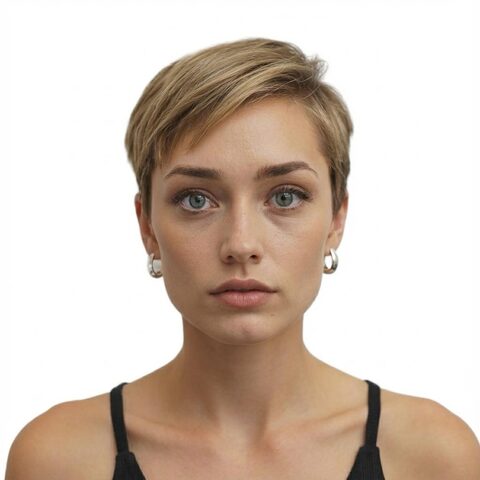
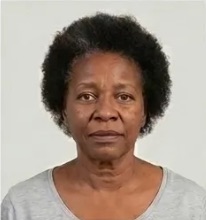
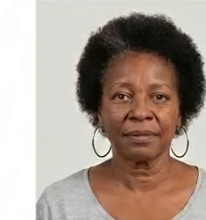
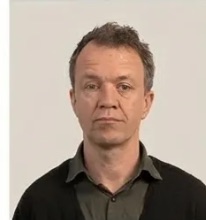
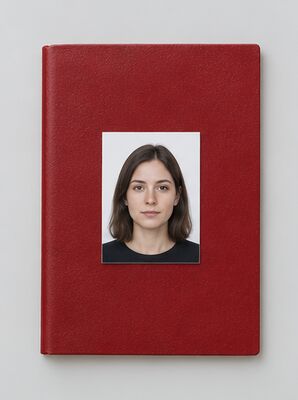
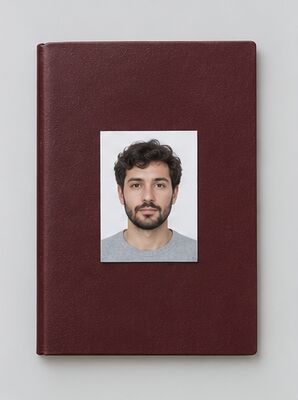
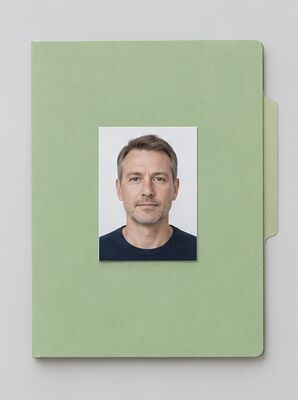
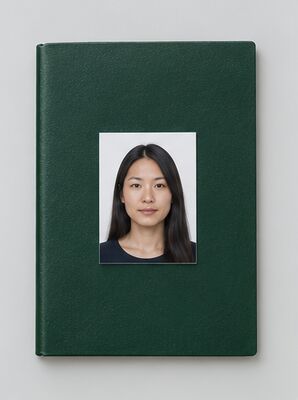
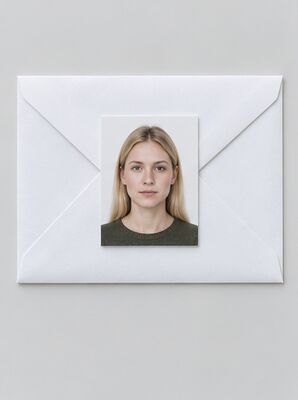
The photo for the German eAT uses a portrait format of 35×45 mm, which is 3.5×4.5 cm. It is a portrait format, a little taller than it is wide. Inside this size, the head takes up most of the height. In our template the head is about 34.5 mm from the chin to the crown, with about 3 mm of free space between the top of the hair and the upper edge of the photo. The face sits in the centre of the frame and the top of the shoulders is visible at the bottom edge.
If you print the photo yourself, print it at 600 DPI so that it stays sharp at this small size, and cut it exactly to 35×45 mm. A photo that is cropped too loosely, too tightly, or prepared in another country's passport size (for example a square print) does not match the German format, and the office will ask for a new one. Our photo maker sets the format, the head height and the space above the hair automatically, so you do not have to measure anything with a ruler.
Printed or digital photo
The German format works both ways. You can print the photo at 600 DPI and bring the paper print to your appointment, or keep the digital file if your office or photo service accepts digital photos. Our tool gives you a digital file in the correct size that you can print at home, at a photo kiosk or at a print shop in Germany. If you print it, use photo paper and check that the print is sharp and that the colours look natural, with no colour cast on the skin.
Taking the selfie, step by step
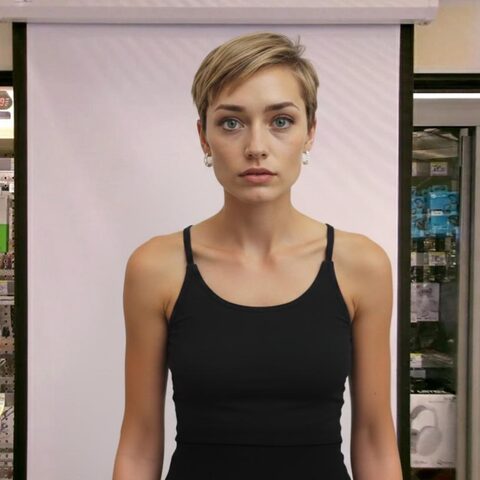
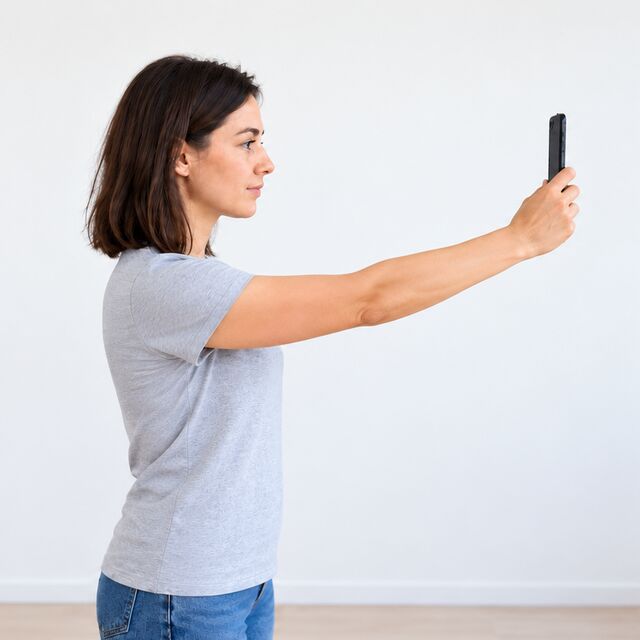
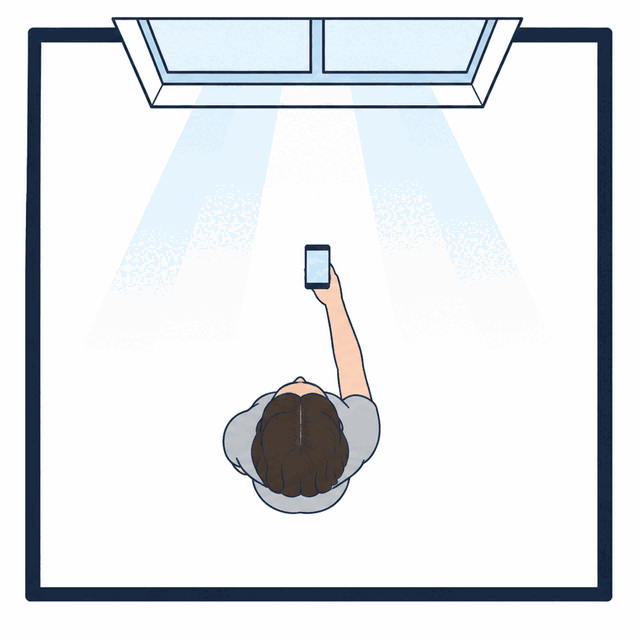
Stand about half a metre from a plain wall, facing a window, so daylight falls evenly on your face. Tie back long hair that falls over the eyes, take off your glasses and wipe away shine on the forehead. Hold the phone straight at the height of your eyes, not below the chin, and look into the lens rather than at the screen. Leave some space above your head and around the shoulders, because the AI needs room to crop. Take a few shots with a relaxed face and your mouth closed, then upload the sharpest one. The whole thing takes a couple of minutes and costs nothing, which is often easier than finding a studio and waiting for an appointment.
Printing at home or at a shop
The download is a high-resolution file ready to print at 600 DPI. At home, use glossy or matte photo paper and turn off any "fit to page" or scaling option in the print dialog, so the print keeps its exact dimensions. Any print shop or drugstore kiosk can also print the file for you. Cut along the edges with a sharp blade or scissors, measure once with a ruler, and keep the print flat in an envelope until the appointment.
Background and light
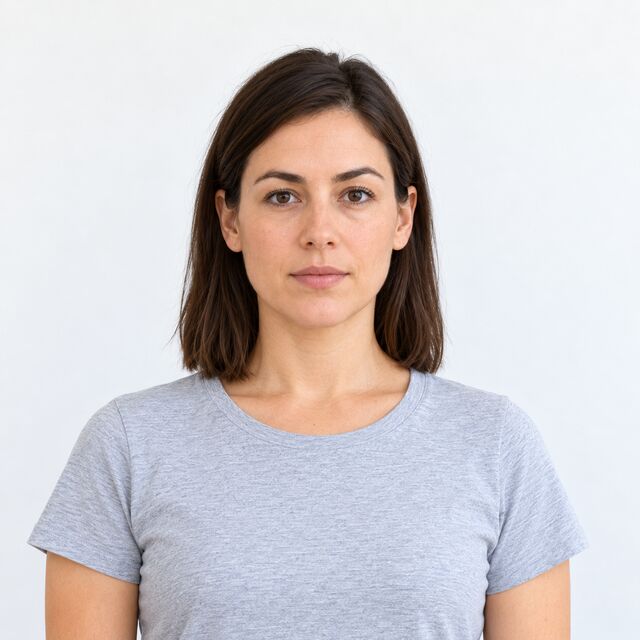
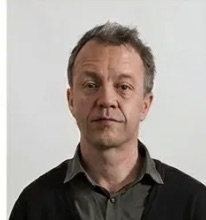
German biometric photos use a plain, even background. Our tool sets a light grey background that gives good contrast to light and dark hair alike. There must be no shadows behind the head, no patterns, no doors or furniture in the frame and no other people in the photo. The face should be lit evenly from the front, without strong shadows on one side, reflections on the skin or glare on the forehead. Daylight from a window in front of you is usually the easiest way to get this at home; avoid a ceiling lamp right above your head, which leaves dark areas under the eyes, and avoid the camera flash, which makes the skin shine.
Pose and expression
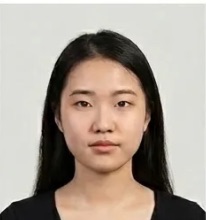
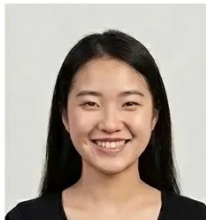
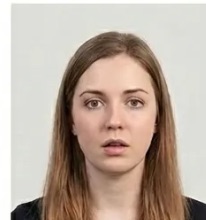
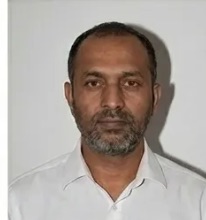
Look straight into the camera with a neutral expression and your mouth closed. Both eyes must be open and clearly visible, and hair should not cover the eyes or the outline of the face. Keep your head straight, not tilted or turned to one side, and keep your shoulders level. A natural, relaxed face works best: a big smile, raised eyebrows or a frown can make the photo fail the biometric check. Ask someone to take the photo for you if you can; if not, a selfie at arm's length works too, as long as the camera is at eye level.
Glasses, head coverings and jewellery
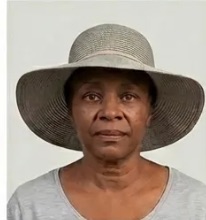
Take off your glasses for the photo if they reflect light or hide your eyes; tinted lenses and thick frames over the eyes are a common reason for a new photo. Remove a hat or cap. Hair, a scarf or a hood should not hide your forehead, your chin or the outline of your face. Large earrings, scarves over the chin and headphones distract from the face, so it is safer to leave them out of the photo.
Photos of children
If your children apply for a permit in Germany along with you, each application needs its own photo, and our tool uses the same 35×45 mm template for babies and children. With a small child it takes patience to get a neutral face with open eyes, so take several photos in good light and let our AI check pick out the problems before you choose one. A baby can be photographed lying on a plain light sheet, with nobody else's hands in the frame.
Types of permits in Germany
Before you apply, decide which type of permit you need for your purpose of stay. Common types are:
- Residence permit for employment, if you have a job in Germany.
- Residence permit for students, if you have been admitted to a German university.
- Permit for family reunion, if you join a family member who lives in Germany.
- Permit on humanitarian grounds.
The photo requirements are the same for every type: each card carries the same 35×45 mm biometric photo, whether you come to Germany to work, to study or to join your family.
Documents you need for the application
The exact list depends on the type of permit, but most applications in Germany include:
- A completed application form, available at the local immigration office or online.
- A valid passport, valid for at least six months beyond the intended stay in Germany, and copies of it.
- A recent biometric photo in the 35×45 mm size.
- Proof of health insurance for the whole stay.
- Proof that you have enough money to support yourself during your stay in Germany.
- Documents for your purpose, such as an employment contract, a university admission letter or a marriage certificate.
How to apply for a German residence permit
Step 1: choose the type of permit. Your purpose of stay decides the type, and the type decides which extra documents you need.
Step 2: gather the documents. Collect the form, your passport and copies, proof of health insurance and money, the documents for your purpose and your photo. Prepare the photo early, so that a retake does not delay the appointment.
Step 3: book an appointment. If you are already in Germany, you apply at the local immigration office, the Ausländerbehörde, of the town where you live. If you apply from outside Germany, contact the German embassy or consulate in your country.
Step 4: submit the application. Bring all documents and the photo to the appointment and pay the processing fee, which depends on the type of permit. The state of Baden-Württemberg, for example, explains how to apply for the electronic eAT card on its service portal.
Step 5: wait for processing. Processing times vary, so apply well before your planned start date.
Step 6: collect your card. When the card is ready, check that all details on it are correct, including that the photo printed on the card is clear.
The Federal Office for Migration and Refugees (BAMF) has a guide to the local immigration offices in Germany, and the German Federal Foreign Office covers entry to Germany and applications from abroad.
Applying in Germany or from abroad
Where you apply depends on where you are. People who already live in Germany, for example students who change to a work permit after graduation, go to the Ausländerbehörde of their town. People who are still abroad apply through the German embassy or consulate in their home country. In both cases the office keeps your application on file, so the documents you submit, including the picture, should be complete and current. Ask the office or the embassy in advance which documents it wants as originals and which as copies.
Passport, health insurance and money
Three documents come up in almost every application. Your passport has to stay valid for at least six months beyond the stay you plan, so renew it first if it is close to expiry. Proof of health insurance has to cover the whole period of your stay. Proof of financial means shows that you can support yourself without help; ask the office which proof it accepts for your type of permit. Keep these papers in one folder together with your picture, so nothing is missing on the day.
Before the appointment
A missing document can mean booking a new appointment, which delays the whole process. The evening before, go through the list: completed form, passport and copies, insurance, proof of money, purpose documents and one recent biometric print cut to 35×45 mm. Check that the print is not bent or scratched, and do not staple or glue it to the form unless the office asks you to. Bring the payment for the fee as well, and keep copies of everything you hand in.
How our AI checks your picture
After you upload a selfie, the AI finds your face, measures the head height and the eye line, and crops the image to the German template. It then replaces the background with an even light grey and checks the result against the biometric rules: sharpness, light on the face, a straight head, open eyes, a closed mouth and no glasses glare. If something fails, the tool tells you what to change, so you can retake the selfie in a minute instead of finding out at the office. If the light in your picture cannot be fixed with a retake, the optional retouch corrects shadows and exposure for you.
Extension and permanent residence
If you need to extend your permit, check the specific requirements in good time and ask the immigration office whether it wants a recent photo. After living in Germany for a certain period, usually 33 months, or 21 months with sufficient German language skills, you may be eligible to apply for a permanent residence permit. Keep in mind the timelines and requirements for your type of permit, and if the office asks for a biometric photo, you can make one here in the same 35×45 mm size along with the other documents.
Family reunification
If you hold a permit, your close family members may also be eligible to apply for permits to join you in Germany. Each of them applies with their own documents and their own biometric photo in the 35×45 mm format, so you can make the photos for the whole family with our tool in one sitting at home.
Language and help with the application
Basic German is not always required for the permit, but it helps a lot during the application and with daily life in Germany. If you run into difficulties, consider help from lawyers or immigration consultants who specialise in German immigration law. For the photo you do not need any help: our AI checks it against the German rules before you download it.
Photo checklist for the German eAT
- Correct format: 35×45 mm, head about 34.5 mm.
- Plain light grey photo background, no shadows or patterns.
- Neutral expression, mouth closed, both eyes open.
- Head straight and centred in the photo.
- No hat, no reflections on glasses; your full face stays in the frame.
- Recent, sharp colour photo with no filters or retouching.
Other German documents
Need a photo for another document? The German ID card photo and German passport photo pages list their own requirements. If you only need to enter Germany for a short stay of up to 90 days, see the Germany visa photo page instead.