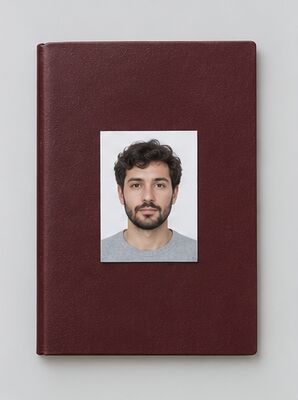
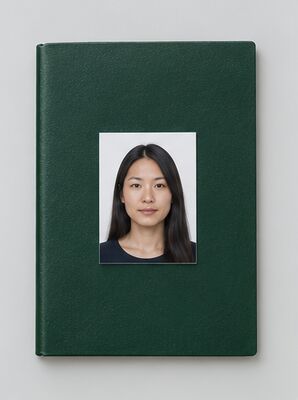
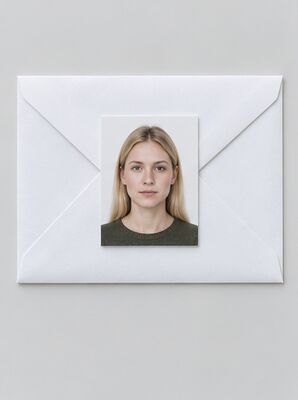
What a US visa photo is for
Every application for a United States visa includes a photo of the applicant. The US visa photo requirements are set by the US Department of State, and consular officers use the US visa photo to match your face to the identity record in your application. The same rules apply whether you apply for a tourist visa, a business visa, a student visa or an immigrant visa. A photo that does not meet them can delay your case, so it is worth getting the US visa photo right before you submit the form.
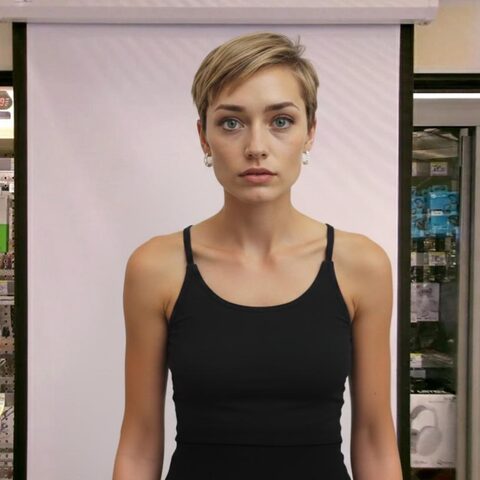
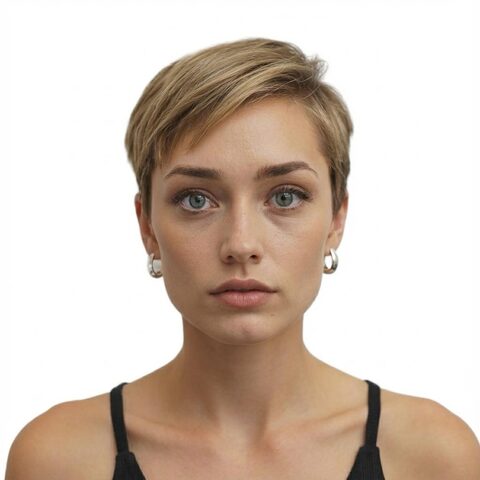
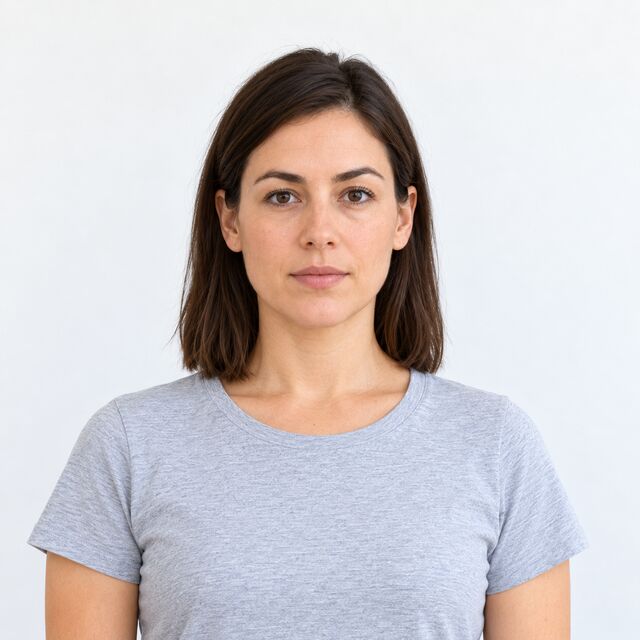
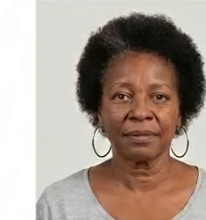
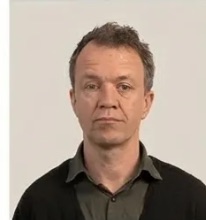
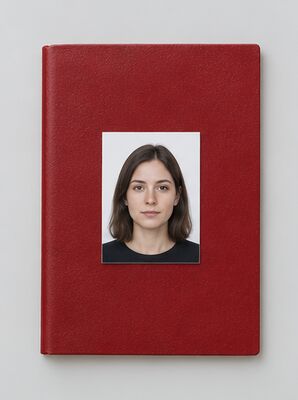
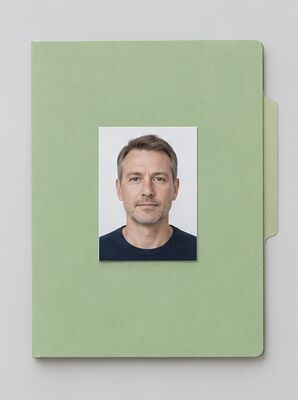
There are two formats of the same US visa photo: a digital image that you upload with the online application, and a printed 2×2 inch photo that some applicants bring to the US visa interview. Both follow one standard for size, head position, background and expression. Our tool makes both from one selfie: a digital US visa photo file sized for the DS-160 upload, and a printable 2×2 inch version at 300 DPI.
US visa photo size: print and digital
The printed US visa photo size is 2×2 inches (51×51 mm), which is about 5.1×5.1 cm. The photo must be square, in colour and printed on photo-quality paper.
The digital US visa photo size is set in pixels. According to the digital image requirements, the image must be square (height equal to width), at least 600×600 pixels and no larger than 1,200×1,200 pixels. The file must be a JPEG of 240 KB or less, with a compression ratio no greater than 20:1, in 24-bit sRGB colour. A US visa photo file that is too large, too small or not square fails the upload in the online application, so check the pixel size and file size before you submit your US visa photo.
If you scan a printed 2×2 inch photo instead of taking a digital one, scan it at 300 pixels per inch (12 pixels per millimetre). A 2×2 inch print scanned at 300 ppi gives exactly 600×600 pixels, the minimum digital US visa photo size.
Head size and eye position
Framing is the part of the US visa photo requirements that most home photos get wrong. On the photo composition template, the head in a 2×2 inch print must measure 1 to 1⅜ inches (25–35 mm) from the top of the hair to the bottom of the chin, and the eyes must sit 1⅛ to 1⅜ inches (28–35 mm) above the bottom edge of the photo.
For a digital US visa photo the same rule is written in percentages: the head takes 50–69% of the total image height, and the eye line sits at 56–69% of the image height measured from the bottom. Our template places the head at about 1.29 inches and the eyes at about 1.18 inches from the bottom of a 2×2 inch photo, which is inside both ranges.
Some versions of the main State Department photos page have listed 22 mm as the lower limit for head height. One inch is 25.4 mm, and the photo composition template on the same site gives 25–35 mm, so use 25 mm as the lower bound when you check a US visa photo yourself.
Background, colour and light
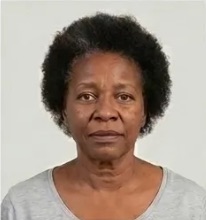
A US visa photo needs a plain white or off-white background with no patterns, objects or shadows behind the head. The photo must be in colour; a black and white US visa photo is not accepted. Light should fall evenly on the face so there are no dark shadows across the eyes or one side of the face, and no shadow of the head on the wall behind you.
Daylight from a window in front of you works well. Avoid standing with the window behind you, which puts your face in silhouette, and avoid direct sunlight, which leaves hard shadows. Our tool sets a clean white background for your US visa photo and checks the light on the face.
Expression, pose and what you wear
- Face the camera directly with your full face visible, head centred and not tilted.
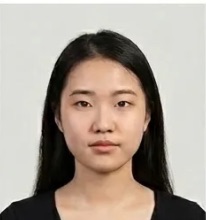
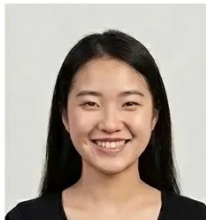
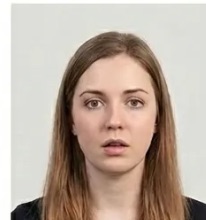
- Keep a neutral expression with both eyes open and your mouth closed.
- Your hair from the top of the head to the bottom of the chin must be in the frame.
- Wear everyday clothes. Uniforms are not acceptable, except religious clothing worn every day.
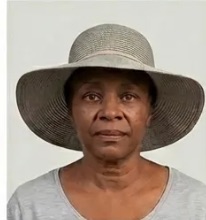
- No hats or head coverings, unless worn daily for religious purposes; the full face must stay visible with no shadow on it.
- No headphones, earbuds or wireless hands-free devices. Hearing devices you normally wear are allowed.
- The US visa photo must show how you look today and be taken within the last 6 months.
Glasses in a US visa photo
Glasses are not allowed in a US visa photo. The rule has applied since November 1, 2016. The only exception is when glasses cannot be removed for medical reasons. In that case the frames must not cover the eyes, there must be no glare or shadow on the eyes, and you must include a signed medical statement with the application. Older advice that allows glasses in a US visa photo is out of date, so take them off before you take the photo.
DS-160 photo upload for nonimmigrant visas
Nonimmigrant visa applicants who use the DS-160 or DS-1648 form upload a digital photo as part of the online application. This covers tourist and business (B1/B2) visas, student visas and other temporary US visa types. No print is sent at this stage. The DS-160 photo must be a square JPEG of 600 to 1,200 pixels, 240 KB or less, in colour, with a white or off-white background and taken within the last 6 months.
Some US embassy and consulate posts also ask for one printed US visa photo at the interview, even after the digital upload. The State Department does not publish a list of these posts, so check the website of the US embassy or consulate where you apply before your appointment. Keeping a printed 2×2 inch copy of the same US visa photo is a simple way to be ready.
Printed photos for immigrant visas
Immigrant visa applicants who use the DS-260 form must bring two identical printed photos to the visa interview. Each US visa photo must measure 2×2 inches (51×51 mm) and be printed on photo-quality paper. Print the photo at 300 DPI so it stays sharp, cut both copies to the exact size, and do not use a photo printed on plain office paper.
Applicants at the US Consulate General Hong Kong and Macau are asked for photos of 50×50 mm (2×2 inches) without borders, so trim any white border from the print.
Diversity Visa photo
The Diversity Visa entry uses a digital photo: a square JPEG of at least 600×600 pixels and no larger than 240 KB. Selected applicants also bring two 2×2 inch printed photos to the interview. For the entry itself, see our Green Card Lottery photo page.
Photos that are not accepted
The State Department lists photo sources that are not acceptable for a US visa: photos copied from a driver's license, snapshots, magazine photos, vending machine photos and full-length photographs. The photo must not be digitally enhanced or altered to change your appearance, so do not use beauty filters or skin-smoothing apps on your US visa photo. Acceptance is always at the discretion of the US embassy or consulate where you apply.
The State Department photo cropping tool
The State Department offers a photo cropping tool that resizes an image to 600×600 pixels. It only crops the photo; it does not check the light, background, expression or head position. Our AI check looks at all of these before you download your US visa photo.
Do you need a US visa photo at all?
Citizens of countries in the Visa Waiver Program may visit the United States for short stays without a visa, and no US visa photo is needed for those trips. Check the official Visa Waiver Program page to confirm whether your country takes part before you start a full US visa application. If you need a photo for another American document, see our US passport photo page or the Green Card photo page.
Which visa photo do you need: digital, printed or both
The visa photo you need depends on the visa form you fill in, not on the reason for your trip. All visa categories share one photo standard, but the way you hand the photo in differs:
- Nonimmigrant visa (DS-160 or DS-1648): a digital visa photo uploaded with the online application. Some posts also ask for one printed visa photo at the visa interview.
- Immigrant visa (DS-260): two identical printed 2×2 inch visa photos, brought to the visa interview.
- Diversity Visa: a digital visa photo with the entry, then two printed 2×2 inch visa photos at the visa interview if you are selected.
- Visa Waiver Program trips: no visa and no visa photo, because no visa application is made.
Because the digital file and the print come from the same standard, one good photo covers every case. Make the digital visa photo first, keep the original file, and print the same image at 2×2 inches when a visa interview calls for paper copies. Using the same visa photo in the US visa application and at the visa interview also avoids confusion when the consular officer compares them.
How to take a visa photo with your phone, step by step
The State Department allows photos you take yourself, as long as they are not digitally altered. A modern phone camera is sharp enough for a visa photo; what matters is light, distance and pose.
- Find a plain wall. A flat white or off-white wall or door is ideal. A white sheet pulled tight against a wall is a good substitute. Stand a little away from it so your body does not cast a shadow on the background.
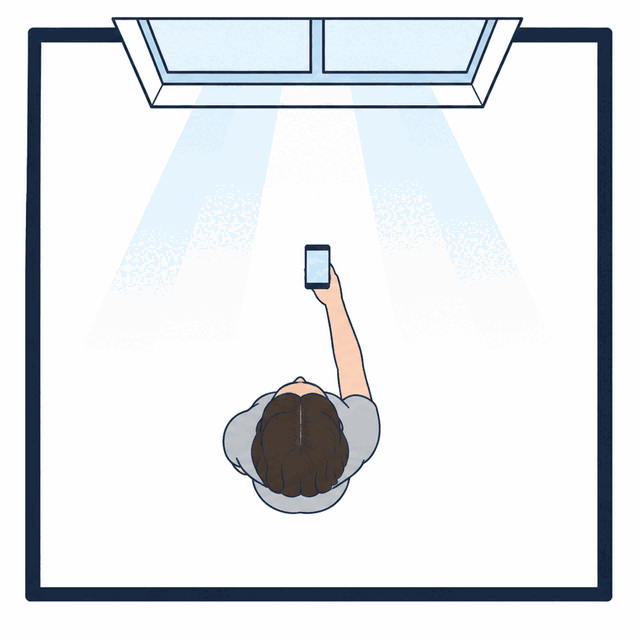
- Use soft light from the front. Face a window so daylight falls evenly across your face. Do not stand with the window behind you, and avoid direct sun or a single ceiling lamp, which leave hard shadows under the eyes and nose.
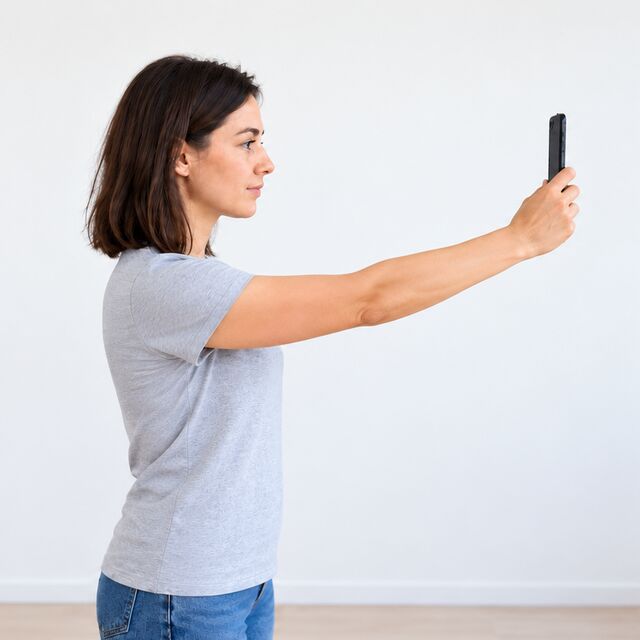
- Keep the camera at eye level. Ask someone to hold the phone about an arm's length or a little more away, level with your eyes. A camera held above or below eye level changes the apparent head size and tilts the face in the visa photo.
- Frame the whole head. Leave space above your hair and below your chin, with your head centred left to right. Hair cut off at the top edge is one of the most common framing errors; our tool crops the photo for you, so it is better to leave too much space than too little.
- Hold a neutral face. Look straight into the lens with both eyes fully open and your mouth closed. Do not smile, squint or raise your eyebrows. Pull hair back from your eyes and face.
- Check before you upload. Look at the visa photo on a larger screen. Confirm that the background is white or off-white, there are no shadows across your face, your glasses are off, there are no earbuds or headphones, and any head covering is one you wear daily for religious reasons.
Take several photos in a row and pick the sharpest one. Then upload it to our photo maker: it crops the image to the correct size, places your head and eyes inside the official ranges, sets the white background and runs the check before you download your visa photo.
How to check a visa photo yourself
If you already have a photo from a studio or from an earlier visa application, you can check it against the rules before you use it again.
- Age of the photo: it must be taken within the last 6 months and show how you look today. A photo used on an older visa application is usually too old.
- Pixel size: open the file properties on your computer or phone. Width and height must be equal and between 600 and 1,200 pixels.
- File size and format: the file must be a JPEG of 240 KB or less. A PNG or HEIC file from a phone needs to be converted before you upload it.
- Head size in a print: measure with a ruler from the bottom of the chin to the top of the hair. The result must be between 1 and 1⅜ inches (25–35 mm).
- Eye line in a print: measure from the bottom edge of the photo to the eyes. It must be between 1⅛ and 1⅜ inches (28–35 mm).
- Background and light: white or off-white, no patterns, no shadows on the face or behind the head.
If any of these points fails, it is faster to take a new visa photo than to edit the old one, because edits that change your appearance are not allowed.
Uploading the photo to the online application
In the DS-160 the photo upload is part of the online application itself. Prepare the file before you start the form: a square JPEG of 600 to 1,200 pixels and no more than 240 KB. A file from our tool already meets these limits. If the upload is rejected, the cause is usually the file rather than your face: the image is not square, it is smaller than 600 pixels, it is larger than 240 KB, or it is in a format other than JPEG.
Do not shrink the visa photo by cutting it to a smaller crop or by compressing it so hard that it looks blocky; the compression ratio must stay at 20:1 or less. Do not upload a phone screenshot of a photo, and do not scan a print at low resolution. After the upload, keep the same JPEG file. If your post asks for a printed photo at the visa interview, print that exact image so the print matches the visa photo in your online application.
Printing a visa photo for the interview
A printed visa photo must be in colour, 2×2 inches (51×51 mm), on photo-quality paper. Plain office paper is not accepted. When you print at home or at a print shop, set the print size to exactly 2×2 inches at 300 DPI and turn off any "fit to page" option, which would change the size and the head position.
Cut the print carefully along the edges so the photo stays square. For an immigrant visa, bring two identical photos made from the same image. Keep the prints flat and clean in an envelope so they reach the visa interview in the same condition as they left the printer. If you apply in Hong Kong or Macau, trim any white border, because that consulate asks for photos without borders.
Where to get a visa photo: options compared
- At home with our photo maker: low cost and quick, fully online with no travel. The AI check tells you before you apply whether the visa photo meets the rules.
- Pharmacy or print shop: a moderate price and an in-person visit. Results vary with how well the staff know the current visa photo rules, such as the ban on glasses.
- Professional photo studio: a higher price and an appointment. Usually good results when the studio knows the current visa photo specifications.
- Photo booth or vending machine: vending machine photos are not accepted for a visa application.
Whichever option you choose, the visa photo must still meet the same size, background, expression and age rules. A print from a shop does not give you the digital file you need for the DS-160 upload unless you ask for it, so many applicants make the digital visa photo first and print it afterwards.
Why visa photos are refused
Acceptance is always at the discretion of the US embassy or consulate where you apply. The State Department lists these common reasons for refusing a visa photo:
- Glasses. Not permitted since November 1, 2016, apart from the medical exception with a signed statement.
- Hats and head coverings. Allowed only when worn daily for religious purposes, with the full face visible and no shadow on it.
- Headphones and wireless devices. Headphones, earbuds and Bluetooth earpieces are not acceptable.
- Wrong source. Copies of a driver's license photo, snapshots, magazine photos, vending machine photos and full-length photographs are refused.
- Digital changes. Filters or edits that change your appearance in any way.
- Uniforms. Only everyday clothing or religious clothing worn daily is permitted.
- Head size and eye position. A head under 50% or over 69% of the image height, or eyes outside 56–69% from the bottom, fails the framing check.
- An old photo. A visa photo taken more than 6 months before the visa application.
A refused photo can mean a new photo, a second visit or a delay in your visa case. Checking the visa photo before you apply is the simplest way to avoid that.
Special cases
Medical glasses. If glasses cannot be removed for medical reasons, they may stay on only if the frames do not cover the eyes and there is no glare or shadow on the eyes. A signed medical statement must be included with the visa application.
Religious head coverings. A head covering worn daily for religious purposes is permitted. Your full face must stay visible, and the covering must not cast a shadow on your face.
Hearing devices. Hearing devices and similar articles may be worn in the visa photo if you normally use them. This is a separate rule from the ban on headphones and wireless hands-free devices.
Children. The State Department photos page does not set separate rules for children, such as how an infant may be supported or whether expression rules differ by age. Each child needs a visa photo that meets the same standard; check the official photo requirements page for current guidance before you submit a child's visa application.
Inches, millimetres and pixels explained
US visa rules mix three units, which is where many applicants get confused. The print is defined in inches (2×2) with a metric equivalent (51×51 mm). The digital file is defined in pixels (600 to 1,200 on each side). The link between them is resolution: at 300 DPI, 2 inches equals 600 pixels, which is why a 2×2 inch print scanned at 300 pixels per inch gives the minimum digital file. At the maximum of 1,200 pixels the same 2×2 inch area holds 600 pixels per inch.
The framing rules for the digital file are given as percentages so that they work at any pixel count. In a 600×600 pixel image, a head of 50–69% of the height means about 300 to 414 pixels from chin to top of hair, and an eye line at 56–69% means the eyes sit about 336 to 414 pixels above the bottom edge. In a 1,200×1,200 pixel image, double those numbers. If you crop the image yourself, these numbers are a quick way to see whether the head is too small or too large.
US visa forms at a glance
Each US visa form handles the photo in its own way, so it helps to know which form you are filling in before you prepare anything:
- DS-160 is the online application for a nonimmigrant US visa, such as a B1/B2 visitor visa for tourism or business, or a student visa. The digital photo is uploaded inside the form.
- DS-1648 is another nonimmigrant US visa form with a digital photo upload.
- DS-260 is the online application for an immigrant US visa. Here the photo step is different: you bring two printed 2×2 inch photos to the US visa interview.
- Diversity Visa entry takes a digital photo with the entry; selected applicants bring two printed photos to the US visa interview.
The photo rules are the same across all of these US visa forms. Only the delivery changes: digital upload, paper prints, or both.
From photo to US visa interview: the order of steps
- Check whether you need a US visa. Citizens of Visa Waiver Program countries may not need one for a short stay in the United States.
- Find your US visa form. A nonimmigrant US visa uses the DS-160 or DS-1648; an immigrant US visa uses the DS-260.
- Make the photo. Take it within the last 6 months, with a white background and no glasses, and keep the original JPEG.
- Fill in the online application. For a nonimmigrant US visa, upload the photo when the DS-160 asks for it.
- Schedule the US visa interview. Scheduling and wait times vary by country and by post, so follow the instructions on the website of the US embassy or consulate where you apply.
- Prepare prints if needed. Check whether your post asks for a printed photo, and bring two identical prints for an immigrant US visa.
Preparing the photo early means one less task on the day of your US visa interview, and you can reuse the same file if the post asks for a print later.
One application per person
Every US visa applicant needs their own photo, including children travelling with their parents. The photo must show only that person: a family photo, a group photo or a photo cropped from a holiday snapshot is not accepted. If a whole family applies for a United States visa, take a separate photo of each person against the same white wall, one after another, so the light and background stay the same. Our tool processes each photo on its own and checks it against the US visa rules.
Can you reuse a US visa photo?
A US visa photo must be taken within the last 6 months, so a photo from an older United States visa application usually cannot be used again. If your appearance has changed since the photo was taken, for example after a new beard or a large change in weight, take a new one even if it is less than 6 months old, because the photo must reflect how you look today. The US passport uses similar 2×2 inch rules, but check the US passport photo page or the USCIS photo page for the exact requirements of those applications before reusing a print.
Why the US rules are so strict
The rules exist so that a consular officer can reliably match the face in the picture to the person in the application and to the person at the window. That is why the head has to fill a set share of the frame, why the background must be plain, and why glasses, hats and edits are ruled out: each of them hides or changes part of the face. The same reasoning explains the 6 month limit. An image from several years ago may no longer look like you, and the United States consulate needs a current likeness.
It also explains why a picture can be refused even when the dimensions are correct. A square JPEG of exactly 600 pixels can still fail if the face is in shadow, the eyes are half closed or the head is turned. Size is only one of the checks; the whole image has to work as an identity picture.
Camera tips for a sharp image
- Wipe the camera lens before you start. A smudged lens gives a soft, hazy image that looks out of focus.
- Use the main rear camera if someone can help you; it is usually sharper than the front camera. With the front camera, use the self-timer so you can hold still.
- Do not use digital zoom. Move the phone closer instead, or simply leave extra space around your head and let the tool crop it.
- Turn off beauty, portrait and filter modes. They smooth skin, blur the background or change the shape of the face, and the rules do not allow changes to your appearance.
- Turn off the flash when you have daylight. A flash in front of the face often leaves glare on the skin and a hard shadow on the wall.
- Tap the screen on your eyes to set focus and exposure, so the face is sharp and not too dark.
What to wear
Wear the everyday clothes you would normally wear. Uniforms are not accepted, apart from religious clothing worn every day. Because the background is white, a darker or coloured top usually looks clearer than a white one, which can blend into the wall. Pull your hair back from your eyes and make sure the outline of your face is not hidden by a scarf or a high collar, unless you wear a religious head covering every day. Remove headphones, earbuds and wireless earpieces; a hearing device that you normally wear can stay.
File tips: format, colour and compression
Many phones save pictures as HEIC or a similar format by default. The online US visa application accepts JPEG only, so the file must be converted before you upload it. Changing the file name ending from .heic to .jpg is not enough; the file has to be saved again as a real JPEG. Keep the colour profile as standard sRGB in 24-bit colour, not greyscale or CMYK.
To stay under 240 KB, reduce the JPEG quality gently rather than shrinking the pixel dimensions below 600. The compression ratio must stay at 20:1 or less, so do not push the quality so low that blocks or rings appear around the face. A file from our tool is already square, within the pixel range, under 240 KB and in the right colour format, so you can upload it as it is.
Common myths about the US visa picture
- "Glasses are fine if there is no glare." That was the rule before November 1, 2016. Today glasses are not allowed in a visa picture unless they cannot be removed for medical reasons and a signed medical statement is included.
- "The head can be as small as 22 mm." Some versions of the main State Department page showed 22 mm, but the composition template gives 25–35 mm, and 1 inch is 25.4 mm. Use 25 mm as the lower limit.
- "JPEG2000 is accepted." The official digital image requirements list JPEG only, so save the file as a JPEG before you upload it.
- "Each visa category has its own rules." B1/B2 visitor visas, student visas, immigrant visas and the Diversity Visa all follow the same standard. Only the delivery (upload or print) differs.
- "The State Department cropping tool checks compliance." It resizes an image to 600×600 pixels and nothing more. Light, background, expression and head position are not checked.
- "Visa Waiver Program travellers need a visa picture." No visa is issued for those trips, so there is no visa picture either.
At the US embassy or consulate
The final word on any picture belongs to the US embassy or consulate that handles your case. Posts can add their own practical requests on top of the national standard: some ask nonimmigrant visa applicants for one printed copy at the interview, and the US Consulate General in Hong Kong and Macau asks immigrant visa applicants for prints without borders. The State Department does not keep a single list of these local requests, so read the instructions on the website of your US embassy or consulate before your appointment.
The same applies to interview scheduling: wait times and procedures vary by country and by post. Follow the instructions of the post where you apply rather than general advice, and keep your visa application confirmation, your passport and any prints together so you are ready on the day.
US visa picture and other American documents
The US visa is not the only American document with a square 2×2 inch picture. The US passport uses similar rules, and the Diversity Visa entry, often called the Green Card Lottery, uses a digital image of at least 600×600 pixels. The details are not always identical across applications. Before you reuse a print from one application for another, check the rules of that document on its own page, for example the Green Card photo page.
If you are planning several applications at once, for example a US visa now and a United States immigrant application later, it is still worth keeping the original high-resolution file. A fresh picture is needed once the 6 month limit has passed, but the same setup at home (white wall, window light, phone at eye level) gives consistent results each time.
Printing a US visa picture outside the United States
If you have the prints made outside the United States, keep in mind that many countries use a different standard format for their own passports and ID cards, and a local print shop may set that format by default. Ask for exactly 2×2 inches (51×51 mm), square, in colour, on photo-quality paper, and check the result with a ruler before you leave: the head should measure 25–35 mm from chin to top of hair. A rectangular print, or a square print with the head too small, will not meet the United States rules even if it looks like a normal passport picture.
The easiest route is to bring the finished file from our tool and ask the shop to print it at its real dimensions without scaling. The file already has the correct crop and white background, so the shop only needs to print and cut it. For an immigrant visa, ask for at least two identical copies from the same file, and keep a spare in case the US embassy or consulate asks for another.
Timing: when to take the picture
Because the picture must be taken within the last 6 months, timing matters more than many applicants expect. Taking it too early means it may expire before a later step of the process, such as an interview that asks for prints; taking it on the last evening leaves no time to retake it if something is wrong. A practical approach is to take the picture shortly before you start the DS-160 or DS-260, check it, and keep the file. If months pass before your visa interview, compare the date of the picture with the 6 month limit and take a new one if needed.
The same goes for changes in appearance. A new hairstyle that covers the face, a beard grown or shaved, or a large change in weight can make an older picture a poor match, even within 6 months. The rules ask for a picture that reflects your present-day appearance, so if in doubt, take a new one. It costs a few minutes at home and removes one possible reason for a delay in your visa case.
What our AI check looks at
After you upload a picture, the tool prepares it and then checks it against the State Department rules, one by one:
- Crop and framing: a square image with the head at 50–69% of the height and the eyes at 56–69% from the bottom.
- Background: replaced with plain white, with no objects, patterns or shadows left behind the head.
- Face and pose: head straight and centred, both eyes open, mouth closed, neutral expression.
- Glasses and accessories: a warning if glasses, a hat or headphones are visible.
- Light and sharpness: even light on the face, no strong shadows, no blur.
- File: a JPEG of 600×600 pixels or more and 240 KB or less, plus a 2×2 inch version at 300 DPI for printing.
If something fails, the result tells you what to fix, so you can take another picture at once instead of finding out at the visa interview. The final decision is still made by the consular officer, but a picture that passes each point gives your visa application the best start.
US visa photo checklist
- Size: 2×2 inches (51×51 mm) printed, or a square 600–1,200 pixel JPEG.
- File size: 240 KB or less for the digital US visa photo.
- Head 1 to 1⅜ inches from chin to top of hair; eyes 1⅛ to 1⅜ inches from the bottom.
- Plain white or off-white background with no shadows.
- Colour photo, taken within the last 6 months.
- Neutral expression, both eyes open, mouth closed.
- No glasses, no hat (unless religious), no headphones.
- No filters or edits that change your appearance.