Last updated: June 13, 2026 · Reviewed by Jack Woo, Senior Travel Documents Specialist
Free, fast, and compliant with official requirements
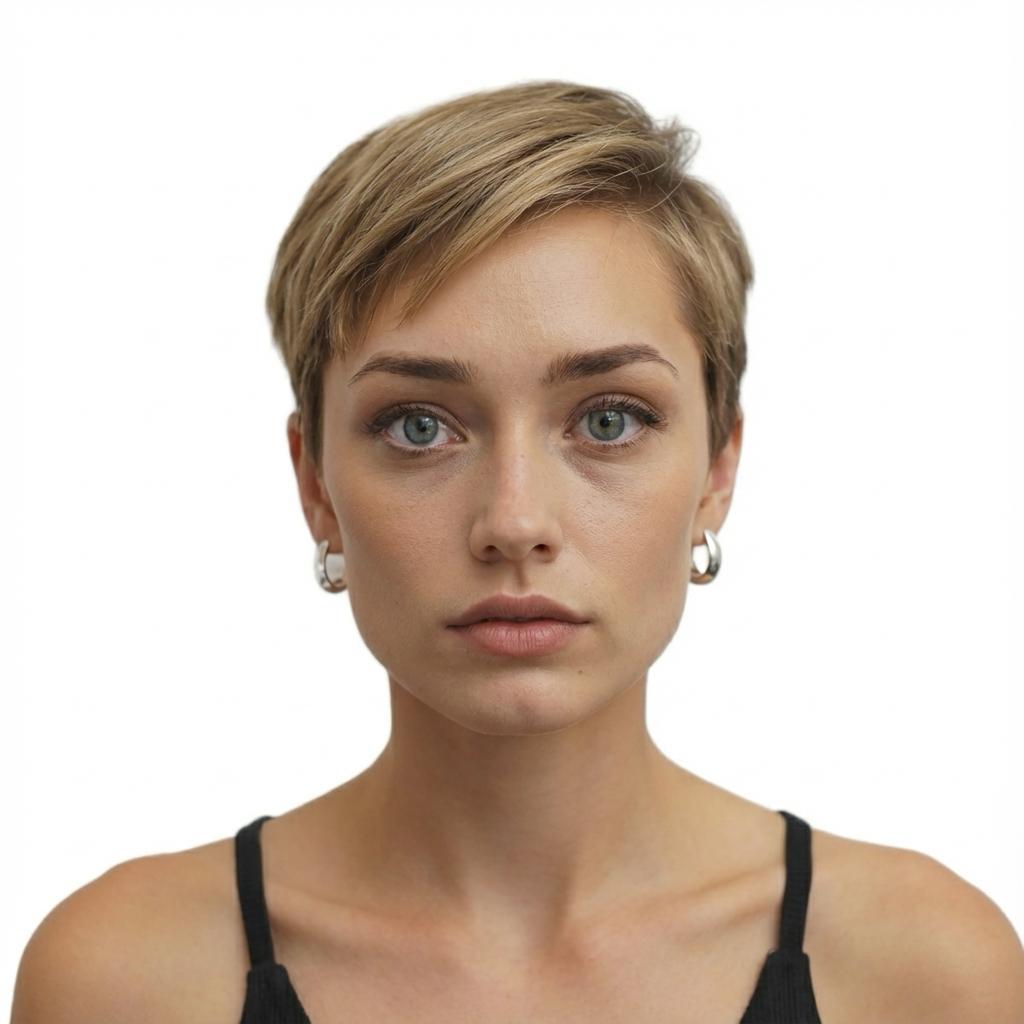
| Size | 400 x 600 px |
| Resolution | 1 DPI |
| Background color |
#FF0000 background
|
The Indonesia eVoA (Electronic Visa on Arrival) is a pre-arrival digital permit valid for a 30-day single-entry stay. Citizens of 97 eligible nationalities as of January 2024 apply through Indonesia's official immigration portal before departure. The Indonesia visa on arrival photo is submitted digitally during this application; no printed photo is accepted for the upload. The eVoA is valid at Soekarno-Hatta International Airport in Jakarta, Ngurah Rai Airport in Bali, and other qualifying international airports, seaports, and land crossings. Getting the photo wrong (wrong file format, incorrect dimensions, or a file that is too large) is the most common point of failure at the upload step. This page covers every confirmed photo requirement and the most frequent causes of rejection.
The eVoA photo is for digital upload only.
| Requirement | Value |
|---|---|
| Minimum dimensions | 400 × 600 px (width × height) |
| Aspect ratio | Portrait, 2:3 |
| Color | Color (not black-and-white) |
| File format | JPEG, JPG, or PNG |
| Maximum file size | 200 KB (info page) or 2 MB (registration page); see note below |
| Head height | 50–60% of total photo height (hair to chin) |
| Eye height from bottom | 50–60% of total photo height |
| Expression | Neutral |
| Submission method | Online portal only |
File size conflict. Two conflicting figures appear on the official portal. The registration page at evisa.imigrasi.go.id states a maximum of 2 MB. The general information page on the same portal states a maximum of 200 KB. These values cannot be reconciled. Targeting under 200 KB satisfies both published limits.
Background color. No page on the official imigrasi.go.id portal specifies a required background color for the eVoA photo. The official portal makes no ruling on background. Most independent eVoA travel guides describe plain white. One photo-tool site specifies red, but that figure has no backing from an official government source for this visa type. Plain white is the choice reported as working across the largest number of independent eVoA accounts.
The minimum 400 × 600-pixel dimension is the portal's threshold for processing a face photo. Images below this size fail the upload step outright.
The JPEG/JPG/PNG-only format requirement cuts off two common problem formats: HEIC (the default on many iPhones) and WebP (common for screenshots). The portal does not explain why an upload failed, so travelers often resubmit the same file repeatedly without realizing the format is the issue.
The head-height rule — face from hair to chin must occupy 50–60% of total photo height, which ensures the face fills enough of the frame for biometric comparison against passport data. The complementary eye-position rule (eyes at 50–60% of total height from the bottom) prevents a face that sits too high or too low in the crop.
File size is the most practical trap. Modern smartphones routinely produce JPEG files that exceed the portal's upload limit, and the portal's error messaging is minimal. Resizing or compressing the file before upload is essential.
Lighting. Shoot near a window in natural daylight. Avoid placing a bright light source directly behind you; backlight turns your face into a shadow. Even, diffuse light from in front or to the side produces a well-lit result.
Background. Stand in front of a smooth, plain wall. A cluttered or patterned surface will not meet biometric review expectations, even in the absence of a formally mandated background color.
Framing. Have someone else hold the phone rather than using a selfie grip. This makes it easier to keep the camera level with your eyes and avoids the distortion that appears in close-up self-portraits. The face should occupy most of the frame from chin to just above the crown of the head.
Expression and posture. Look directly at the lens with a neutral expression: mouth closed, no smile, no raised eyebrows. Sit or stand upright without tilting your head.
Capture. Take several shots and compare them on a larger screen before choosing. Check that the face is sharp and that both eyes are fully open.
File preparation. Before uploading, confirm the file's dimensions and size. Most recent smartphones produce photos far larger than 200 KB. Resize or compress the image so it falls under both portal limits before attempting the upload.
Blurry photo. Blurry photos are explicitly listed as unacceptable. Camera shake, subject movement, or using digital zoom in poor light are the usual causes.
Non-face subject. Photos of objects, scenery, documents, or animals will be rejected. The image must show a human face.
Excessive facial expression. Photos with exaggerated expressions are flagged as unacceptable. A relaxed, neutral face is required throughout.
Incorrect framing distance. Photos taken too close to or too far from the camera are not recommended. The face must sit within the 50–60% head-height band relative to the image dimensions.
Wrong file format. The portal accepts only JPEG, JPG, and PNG files. HEIC and WebP fail at upload without a clear error message.
File too large. Modern smartphone cameras commonly produce files that exceed the portal's upload limit, resulting in a rejection that can appear as a silent failure. Compressing to under 200 KB eliminates this risk against both published limits.
Missing onward ticket. A missing proof of onward travel is a documented rejection reason at the application review stage.
Ineligible nationality. Only nationals of eligible countries may apply. Submitting for an ineligible nationality results in rejection.
Fewer than two blank passport pages. Indonesian immigration requires two blank passport pages for entry stamps. Applications for passports that lack them are rejected.
Blurry or cropped passport scan. A blurry or cropped passport biodata scan is one of the most frequently cited rejection causes. The full biodata page must be sharp, unobstructed, and fully visible.
Photo mismatch error. Some applicants have reported a portal error described as "photo mismatch" when the uploaded face does not register as matching the passport holder's data. A recent, well-lit, forward-facing photo reduces this risk.
Because the portal gives limited feedback when an upload fails, having a photo that meets spec before you start saves a restart of the whole application.
| Option | Cost | Time | Approval likelihood | Convenience |
|---|---|---|---|---|
| iShotAPhoto | Low | Quick | High when AI check passes | Fully online, no travel required |
| Pharmacy or chemist | Moderate | Moderate | Varies; staff rarely know eVoA digital pixel specs | Walk-in, nearby |
| Professional photo studio | Premium | Longer | Highest when studio knows visa-specific digital requirements | Requires appointment |
| Automated photo booth | Low | Quick | Varies; booths typically produce prints, not correctly sized digital files | Found in transport hubs |
Costs and times vary by region.
Entry points. The eVoA is accepted at Soekarno-Hatta International Airport in Jakarta, Ngurah Rai Airport in Bali, and other qualifying international airports, seaports, and land crossings. Photo requirements do not vary by entry point.
Arrival card. All travelers must submit a separate digital arrival card within 3 days before arriving in Indonesia. This is processed through the same immigration portal and is a distinct step from the eVoA application.
Bali. Bali eVoA photo requirements are identical to those for all other qualifying entry points; the portal does not distinguish by arrival location. Separately, travelers entering through Bali must pay a mandatory Bali Tourist Levy of IDR 150,000 (approximately USD 10), payable at lovebali.baliprov.go.id. This is not part of the eVoA fee and is handled through a different platform.
Extension. The eVoA may be extended once for 30 additional days at an Indonesian immigration office for a cost of IDR 500,000. The application window is between 14 days before and 1 day before the visa expires. Extension applicants must visit the immigration office in person for a new photograph; the extension application is also initiated through evisa.imigrasi.go.id.
Eligible country count. 97 nationalities are eligible as of the January 2024 ministerial decree. Sources citing 87 eligible countries use a pre-January 2024 figure.
Group applications. Up to 5 people can be included in a single eVoA application. Each person's photo must meet the same individual digital specifications listed in the table above.
Extension photo session. When extending the eVoA in person at an immigration office, the office takes a new photograph on-site. Official guidance specifies wearing formal dress with shoes, with knees, shoulders, and chest covered for this session. This dress requirement applies only to the in-person extension photo, not to the original eVoA upload.
Children. The official portal publishes no age-specific photo guidance for the eVoA. Apply the same digital specifications as for adult applicants.
Religious dress and glasses. The official portal does not address glasses or religious head coverings for the eVoA photo. As a general biometric principle, eyes should be fully visible and the face unobscured.
What are the Indonesia eVoA photo size requirements?
The photo must be at least 400 × 600 pixels (width × height) in a portrait 2:3 ratio. No maximum pixel dimension is specified by the official portal. The head height, measured from hair to chin, must be 50–60% of total photo height, and the eyes must sit 50–60% of the way up from the bottom of the image.
What is the maximum file size for the Indonesia eVoA photo?
Two conflicting limits appear on the official portal. The registration page states 2 MB; the general information page states 200 KB. Both pages are hosted on the same government domain and cannot be reconciled. Targeting under 200 KB satisfies both limits and avoids the silent upload failures reported by travelers whose smartphone photos exceeded the threshold.
What background color is required for the Indonesia eVoA photo?
The official imigrasi.go.id portal does not specify a required background color for the eVoA photo. Most independent travel guides describe plain white. One photo-tool site specifies red, but this is not corroborated by any official government page for this visa type. Plain white is the choice that appears consistently across independent eVoA accounts and aligns with general biometric photo conventions.
How much does the Indonesia eVoA cost?
The government fee is IDR 500,000 (approximately USD 35 in 2026). Credit card payments incur an approximately 3% processing fee, bringing the total to roughly IDR 519,500. Travelers entering through Bali must also pay a separate mandatory Bali Tourist Levy of IDR 150,000 (~USD 10) through a different platform.
How long does the Indonesia eVoA application take to process?
Processing typically takes 1–3 business days, with most approvals arriving within 24–48 hours. No guaranteed processing time is published officially. Applying well before your departure date reduces the risk of delays affecting travel plans.
How long is the Indonesia eVoA valid, and can it be extended?
The eVoA grants a 30-day single-entry stay from the date of first entry. It can be extended once for an additional 30 days at an Indonesian immigration office at a cost of IDR 500,000, giving a maximum continuous stay of 60 days. The visa must be used within 90 days of its issue date.
Which countries are eligible for the Indonesia eVoA?
97 nationalities are eligible under Ministerial Decree Kepmenkumham M.HH-02.GR.01.06 Th 2024, dated January 9, 2024. The list includes the US, UK, Australia, Canada, most EU member states, India, Japan, South Korea, Singapore, and China, among others. Armenia, Mozambique, and Tanzania were added in September 2023. Sources citing 87 eligible countries are using a pre-January 2024 figure.
Do I need to print the Indonesia eVoA?
Printing is recommended. The approved eVoA is delivered as a downloadable PDF via email. Bring at least one printed copy to the immigration counter. A digital copy on your phone can serve as a backup but should not be your only copy.
What is the Indonesia eVoA application process?
The application is made through evisa.imigrasi.go.id. The steps: register an account as a foreign national with personal, passport, and contact details; select the B1 Tourist (Visa on Arrival) type for a 30-day stay; upload your passport biodata page and face photo; complete the form with personal details, your Indonesia address, and travel information; review and submit; pay by credit card. Up to 5 people can be included in a single application. You must also file a separate arrival card through the same portal within 3 days before arriving in Indonesia, which is a distinct step from the eVoA itself.