US Green Card Lottery
Last updated: May 20, 2026 · Reviewed by Jack Woo, Senior Travel Documents Specialist
Perfect US Green Card Lottery photo in 3 seconds
Free, fast, and compliant with official requirements

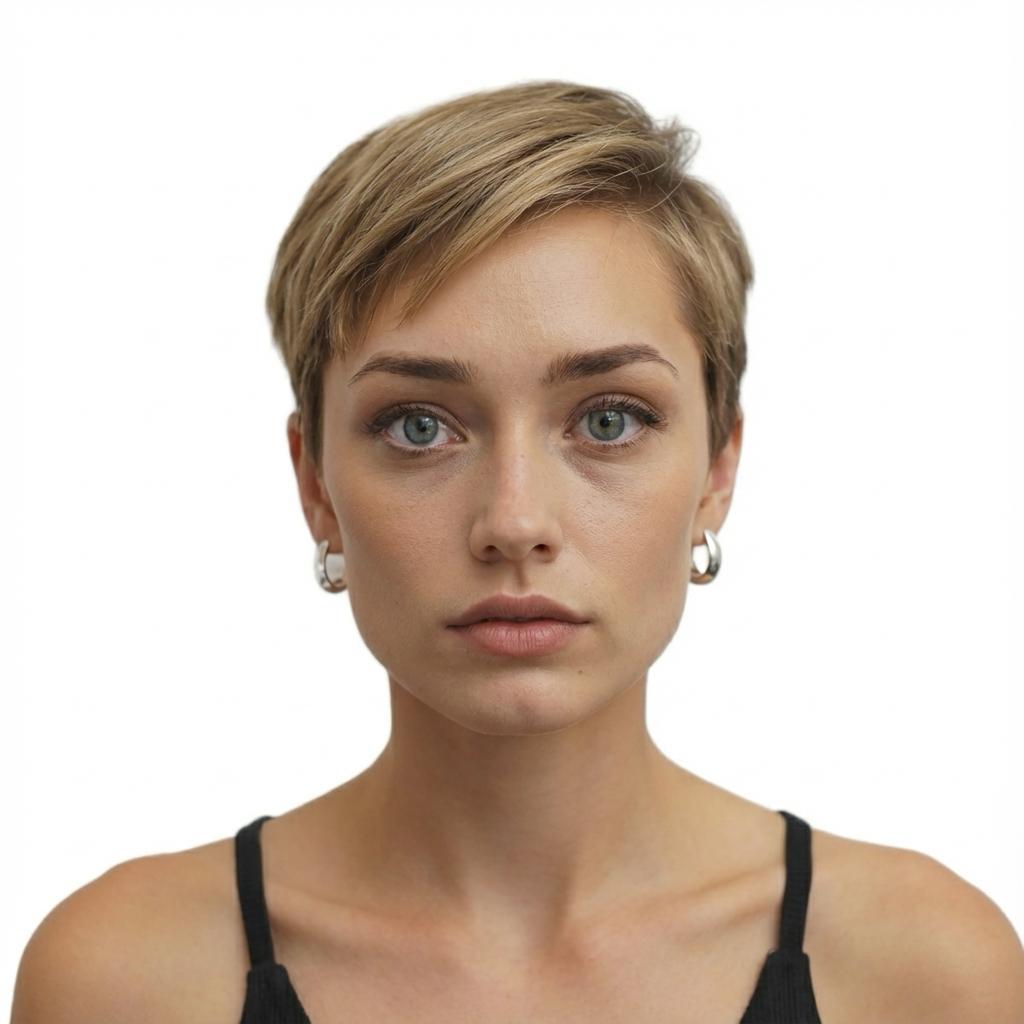
Table of contents
Other documents for United States
Technical requirements for US Green Card Lottery
| Size | 2 x 2 in |
| Resolution | 300 DPI |
| Background color |
White background
|
| Official links | https://www.uscis.gov/green... https://travel.state.gov/co... |
Sample photo for US Green Card Lottery


Document Details
Intro
A green card, formally the Permanent Resident Card, grants the right to live and work permanently in the United States. One path to get a green card is through the Diversity Immigrant Visa Program, widely called the diversity visa lottery or green card lottery, which makes up to 55,000 immigrant visas available each year through random selection among applicants from countries with historically low U.S. immigration rates. Photo requirements apply at two separate stages: a digital upload when submitting the E-DV entry, and two identical printed copies if selected for a visa interview. Both stages follow strict State Department specifications. Read the current program status note in the Country-specific notes section before taking any action on a pending application.
Photo requirements at a glance
All diversity visa photo requirements below come directly from U.S. Department of State photo guidance. Green card photo size requirements differ between the digital entry and the physical interview stage.
For the online DV Lottery entry (digital submission):
| Requirement | Value |
|---|---|
| File format | JPEG (.jpg) |
| Minimum dimensions | 600×600 pixels |
| Maximum dimensions | 1,200×1,200 pixels |
| Aspect ratio | Square (height must equal width) |
| Maximum file size | 240 KB |
| Color depth | 24-bit color, sRGB color space |
| JPEG compression ratio | 20:1 or less |
| Background | Plain white or off-white |
| Photo recency | Taken within the last 6 months |
| Expression | Neutral, both eyes open |
| Eyeglasses | Not permitted |
| Head height | 50–69% of total image height |
| Eye height from bottom | 56–69% of total image height |
For the visa interview (if selected):
| Requirement | Value |
|---|---|
| Printed size | 2×2 inches (51×51 mm) |
| Paper type | Photo quality, matte or glossy |
| Quantity | Two identical copies |
| Head height on print | 1–1⅜ inches (22–35 mm) |
| Eye height on print | 1⅛–1⅜ inches (28–35 mm) from bottom |
Why these specs matter
The U.S. Department of State defines photo specifications for all U.S. visa categories. The green card photo requirements for the DV Lottery apply the same framework as the broader US visa photo requirements, and US passport photo requirements draw from the same State Department composition standards.
JPEG format is the only accepted file type. The digital green card photo size must be square, with a minimum of 600×600 pixels and a maximum of 1,200×1,200 pixels. A widespread misunderstanding holds that 600×600 is the sole acceptable dimension; the official specification sets 600×600 as the floor and 1,200×1,200 as the ceiling. Any square image within that range is valid. The 240 KB file size limit pairs with a maximum 20:1 JPEG compression ratio to preserve sufficient facial detail for identity verification. The 24-bit sRGB color requirement means grayscale images and files with non-standard color profiles are rejected automatically.
The plain white or off-white background provides the contrast needed for reliable face detection. Head placement is tightly constrained: the head from chin to top of hair must occupy 50–69% of the image height, and eye height measured from the bottom must fall between 56% and 69%. For printed interview copies, head height must measure 1 to 1⅜ inches (22–35 mm) on the 2×2 inch (51×51 mm) print, with eye height from the bottom at 1⅛–1⅜ inches (28–35 mm).
How to take the photo with iShotAPhoto
- Open iShotAPhoto and select the US Green Card Lottery document type.
- Take or upload a photo. The AI compliance check validates the image against the State Department's specifications: dimensions, file size, background, and head positioning.
- Review the free preview to confirm framing before proceeding.
- Download the compliant JPEG file for free and upload it directly to the E-DV entry form.
- If you are selected and called to a visa interview, order prints through iShotAPhoto's optional print delivery service. DV selectees must bring two identical 2×2 inch prints on photo-quality paper to the interview.
How to take it yourself with a phone
1. Use natural daylight from a window
Position yourself facing a window so daylight falls evenly on your face from the front. A bright surface or window directly behind you creates backlight and casts shadows across your features, both of which cause rejection.
2. Set up a plain white background
Hang a white sheet or stand in front of a white wall. The background must be uniformly white or off-white with no patterns, objects, or shadows. Even slight tonal variation on the background can trigger rejection.
3. Have another person hold the phone
Ask someone else to photograph you, holding the phone at eye level. This keeps the camera parallel to your face and avoids the distortion introduced by angling the lens up or down.
4. Center your face in the frame
Your full head must be visible, from the top of the hair to the chin, horizontally centered in the frame. Leave a small margin of space above the hair.
5. Check expression and clothing before shooting
Face the camera directly with a neutral expression and both eyes open. Remove eyeglasses. If you wear a hat or head covering for reasons other than daily religious practice, remove it before shooting.
6. Review the image before uploading
Confirm the background is evenly white, both eyes are fully visible and open, the image is sharp throughout, and no shadows fall on your face or the background. A blurry or shadowed shot will fail at submission.
Common rejection reasons
Profile shot or unfocused image
The photo must show your entire face horizontally centered, taken directly from the front. Profile shots and out-of-focus images will not be accepted.
Eyeglasses
Effective November 1, 2016, eyeglasses are no longer allowed in U.S. visa photos, except in rare cases where they cannot be removed for medical reasons. Sunglasses and tinted lenses are prohibited under all circumstances.
Wrong file format or file size
The digital file must be in JPEG format and under 240 KB. PNG, HEIC, WebP, and other formats are rejected outright. A JPEG exceeding 240 KB also fails, regardless of image quality.
Non-square or out-of-range pixel dimensions
The image must be square with a minimum of 600×600 pixels and a maximum of 1,200×1,200 pixels. Non-square images and images outside that pixel range fail at submission.
Non-white or shadowed background
The background must be plain white or off-white. Colored walls, patterned surfaces, visible furniture, and shadows cast onto the background are all grounds for rejection.
Outdated photo
The photo must reflect your current appearance and must have been taken within the last 6 months. A technically correct but clearly outdated image will be rejected.
Digitally altered image
Photos must not be digitally enhanced or altered to change your appearance in any way. Red-eye reduction is acceptable only when applied via the camera's built-in feature at the time of shooting. Post-processing red-eye removal is not permitted.
Photo scanned from an official document
Photos copied or digitally scanned from driver's licenses or other official documents are not acceptable. This includes images taken directly from a passport or identity card.
Low-quality image
Snapshots, magazine photos, low-quality images, and full-length photographs are unacceptable.
Head covering or accessories
Hats or head coverings that obscure the hair or hairline are not permitted unless worn daily for a religious purpose. When worn for religious purposes, the full face must remain visible with no shadows on the face.
Multiple entries in the same registration period
The law allows only one entry per person per registration period. Submitting more than one entry results in disqualification. This disqualification applies to all entries from that applicant for that cycle.
How iShotAPhoto compares to other options
A rejected photo means a rejected entry, with no notification until selection results are published months later. The table below covers the main trade-offs.
| Option | Cost | Time | Approval likelihood | Convenience |
|---|---|---|---|---|
| iShotAPhoto | Free preview; low-cost print delivery | Quick | High when AI check passes | High — shoot at home |
| Pharmacy or chemist | Moderate | Quick to moderate | Varies | Moderate |
| Photo studio | Moderate to premium | Moderate | High when studio knows DV specs | Lower |
| Self-service photo booth | Moderate | Quick | Varies | Moderate |
Costs and times vary by region.
Country-specific notes
Current program status: DV visa issuance paused
The U.S. Department of State has paused all DV immigrant visa issuances pending a review of screening and vetting protocols. There are no exceptions to this guidance. Applicants may still submit visa applications and attend scheduled interviews, but no diversity visas will be issued while the pause is in effect. No existing DV visas have been revoked as part of this guidance.
Applicants with pending DV-2026 cases should monitor the State Department's official news page. All DV-2026 applicants must obtain their visa or adjust status by September 30, 2026.
How the DV Program works
All entries must be submitted electronically on the E-DV website during the designated registration period. No late entries or paper entries are accepted. The DV-2026 registration period ran from October 2, 2024 to November 7, 2024. For DV-2026 and prior cycles, there is no cost to register.
Applicants are strongly encouraged to complete the entry form themselves, without a visa consultant or agent. After submitting, retain your confirmation number carefully. It is the only way to check your green card lottery status after the registration period closes.
Eligibility
The diversity visa lottery makes up to 55,000 visas available each year from countries with low rates of immigration to the United States. Eligibility is determined by country of birth, not current citizenship. Nationals born in countries that have sent large numbers of immigrants to the U.S. in recent years are excluded from each cycle.
Special cases
Eyeglasses and medical exceptions
Eyeglasses are prohibited in DV Lottery photos effective November 1, 2016. In rare cases where glasses cannot be removed for documented medical reasons, an exception may be considered by the consular officer. The exception is narrow and not automatic.
Religious head coverings
A head covering worn daily for religious purposes is permitted, provided the full face remains clearly visible and the covering casts no shadows on the face. Head coverings worn for non-religious reasons are not permitted under any circumstance.
Clothing and uniforms
Uniforms are not permitted in DV Lottery photos, except for religious clothing worn daily. Wear clothing you normally wear on a daily basis.
Children and family members
Photos of the applicant's spouse and all unmarried children under 21 must be included in the DV application, even if those family members are not immigrating. Each person must appear alone in their own photo, and all photos must meet the same specifications as the primary applicant's photo.
Frequently asked questions
What are the green card lottery photo requirements for the online entry?
The digital photo must be JPEG, square and between 600×600 and 1,200×1,200 pixels, under 240 KB, in 24-bit sRGB color. The background must be plain white or off-white. The head must occupy 50–69% of the image height, with eye height at 56–69% from the bottom. The photo must have been taken within the last 6 months, with a neutral expression, both eyes open, and no eyeglasses.
What are the diversity visa photo requirements for the interview?
DV selectees must bring two identical 2×2 inch (51×51 mm) photos printed on photo-quality paper to the visa interview. Head height on the print must be 1 to 1⅜ inches (22–35 mm), and eye height must be 1⅛ to 1⅜ inches (28–35 mm) from the bottom. All background, expression, and head-placement rules from the digital entry apply equally to the printed copies.
Can I wear glasses in my DV lottery photo?
No. Eyeglasses have not been permitted in U.S. visa photos since November 1, 2016, with a narrow exception for documented medical cases where removal is impossible. Sunglasses and tinted lenses are always prohibited.
What background color is required for the DV lottery photo?
The background must be plain white or off-white, with no patterns, textures, objects, or shadows anywhere in the frame.
Can I smile in my DV lottery photo?
No. A neutral facial expression with both eyes open is required. The face must be directly facing the camera in full-face view.
Can I retouch my DV lottery photo?
No. Photos must not be digitally enhanced or altered to change your appearance in any way. Red-eye reduction using the camera's built-in feature at the time of shooting is acceptable; post-processing corrections are not.
Is there a fee to enter the diversity visa lottery?
For DV-2026 and prior cycles, there is no cost to register for the DV Program. Completing the form yourself, without a visa consultant or facilitator, is strongly recommended. Any website charging a fee to enter the lottery for those prior cycles is not the official application site.
Is DV visa issuance currently active?
No. The State Department has paused all DV visa issuances pending a security review, with no exceptions. Applicants may still attend interviews, but no visas will be issued during the pause. No existing DV visas have been revoked. The State Department's news page is the authoritative source for updates on when issuance may resume.
How many photos do I need for the DV lottery?
One digital photo is submitted with the online E-DV entry. For the immigrant visa interview, two identical physical prints are required per applicant.
What happens after I submit my DV lottery entry?
You will receive a confirmation number. Retain it — it is the only way to check your selection status. If selected, you must complete the immigrant visa application, obtain a medical examination from an approved physician, and attend an interview at a U.S. embassy or consulate. All DV-2026 applicants must complete this process by September 30, 2026.
Can the State Department Photo Tool verify my image?
Yes. The Department of State Photo Tool can crop an image and compare it against the official composition template. Final acceptance of any submitted photo is determined by the U.S. embassy or consulate handling the case.
Related documents
Official sources
- U.S. Department of State — Photo Requirements for U.S. Visas
- U.S. Department of State — Digital Image Requirements
- U.S. Department of State — Photo Composition Template
- U.S. Department of State — Photo FAQs
- U.S. Department of State — Diversity Visa Program Entry
- U.S. Department of State — DV-2026 Program Instructions
- U.S. Department of State — DV Visa Issuance Updated Guidance
- Department of State Photo Tool