Canada Visa

Last updated: June 13, 2026 · Reviewed by Jack Woo, Senior Travel Documents Specialist

Perfect Canada Visa photo in 3 seconds

Free, fast, and compliant with official requirements

Before
Original document photo
After
Verified
Processed document photo

Drag and drop your photo here

or

Automatic formatting for compliance with official photo requirements

Other documents for Canada

Canada Citizenship

White background

Size: 50 x 70 mm

Canada Temporary Resident Visa

White background

Size: 35 x 45 mm

Canada Passport

White background

Size: 50 x 70 mm

Canada Permanent Resident Card

White background

Size: 50 x 70 mm

Technical requirements for Canada Visa

Size 35 x 45 mm
Resolution 305 DPI
Background color
White background
Official links http://www.cic.gc.ca/englis... http://www.cic.gc.ca/englis... http://www.cic.gc.ca/englis...

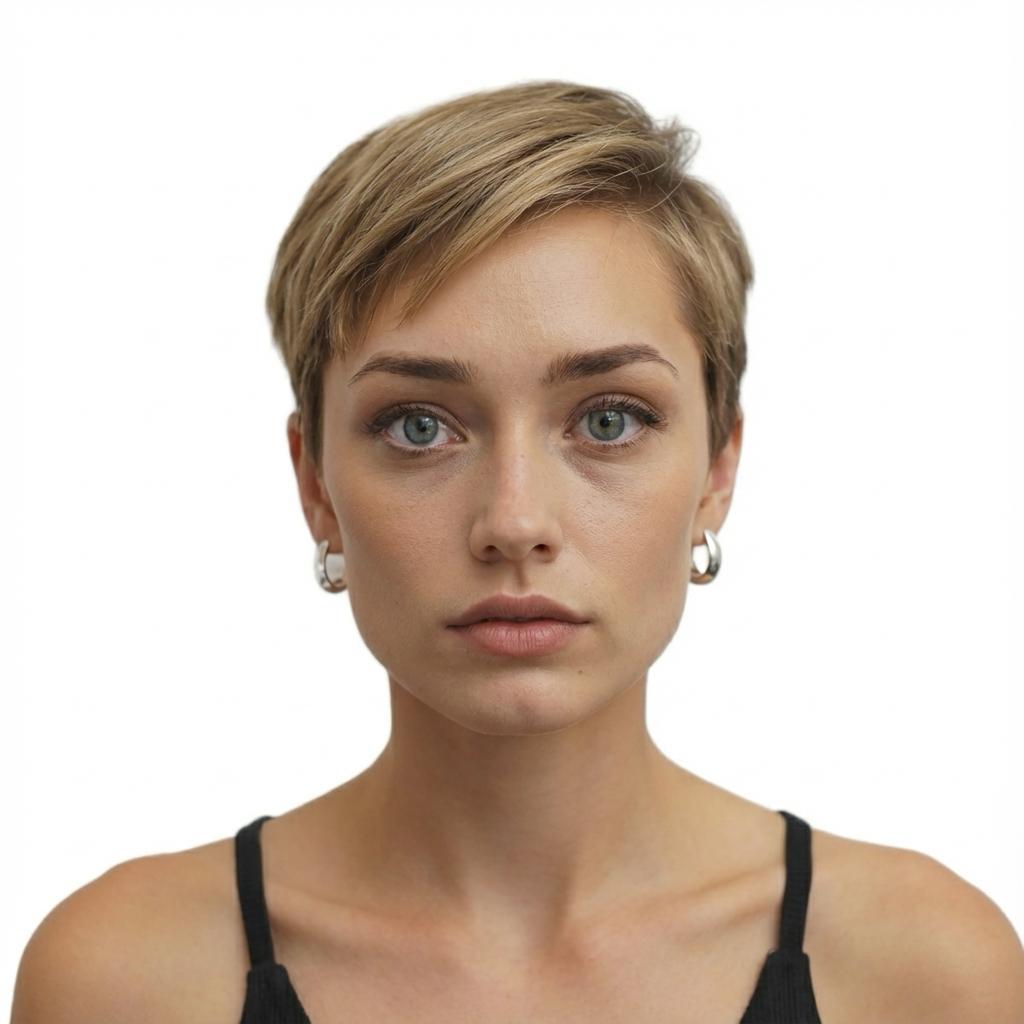
Sample photo for Canada Visa

Document Details

Intro

If you need a visa for Canada to visit for tourism, family, or short business trips, you are applying for a Temporary Resident Visa (TRV). Your Canadian visa will be delayed if your photos fall short: IRCC's photograph specifications state that non-compliant photos require new ones before the application can move forward. The Canada visa photo size starts at a minimum frame of 35 × 45 mm, with the head measuring 31–36 mm from chin to crown.

Photo requirements at a glance

Requirement Specification
Frame width Minimum 35 mm (1⅜ in)
Frame height Minimum 45 mm (1¾ in)
Head height (chin to crown) 31–36 mm
Background Plain white or light-coloured
Expression Neutral, mouth closed
Colour (printed photo) Colour or black and white
Colour (digital upload) Full colour only (24-bit RGB)
Digital file format JPEG or JPEG2000
Minimum pixel dimensions 420 × 540 px
Head height in pixels 372–432 px
File size range 60 KB – 240 KB
Resolution 305 DPI
Recency Taken within the last 6 months
Number required (paper application) Two identical photos

Why these specs matter

IRCC's official photo specifications PDF sets the minimum frame at 35 mm wide by 45 mm tall. Within that frame, your head must measure between 31 mm and 36 mm from chin to crown. Crown is defined as the top of the head, or, if obscured by hair or a head covering, where the top of the skull would be if visible. A photo taken at the wrong distance will put the head outside this range and require replacement.

For digital uploads to the IRCC portal, the image must be at least 420 × 540 pixels, with the head occupying 372 to 432 of those pixels in height, at 305 DPI, in a file between 60 KB and 240 KB, in JPEG or JPEG2000 format. For online submissions specifically, the photo must be in full colour, 24-bit RGB. Printed photos may be black and white, but a black-and-white digital upload will not be accepted.

The background must be plain white or light-coloured, free of shadows and patterns. Photos must be printed on quality photographic paper. Digital photos must not be altered in any way, which means no retouching, colour adjustments, or filter effects beyond cropping and resizing to spec.

How to take the photo with iShotAPhoto

iShotAPhoto is a free online tool that prepares Canada visa photos sized to IRCC specifications.

  1. Upload a recent photo. Choose a photo taken against a plain, light background.
  2. Run the AI compliance check. The tool checks your photo against Canada visa photo requirements, including background colour and head position.
  3. Preview for free. Review the result before downloading.
  4. Download at no charge. Save the correctly sized digital file ready for the IRCC portal upload.
  5. Order a print (optional). If you are submitting a paper application, printed photos can be delivered to your address.

How to take it yourself with a phone

A smartphone can produce a photo that meets Canada visa photo specifications. The six steps below cover the most common failure points.

1. Choose even, natural light. Position yourself near a large window on an overcast day, or in open shade outdoors. Avoid direct sun, which casts hard shadows across the face, and avoid artificial light from below or at an angle.

2. Set up a plain white or light-coloured background. A white wall works well. Hang a white sheet if your walls are painted another colour. Check that no creases, patterns, or shadows appear in the area behind your head.

3. Hold the camera at eye level. Shooting from above or below distorts facial proportions. Have someone else hold the phone directly in front of your face at the same height as your eyes if possible.

4. Frame to include the full head and top of shoulders. Your face should be centred, your full head visible including the top, and the top of your shoulders in the frame. Keep your head upright and facing straight ahead.

5. Adopt a neutral expression. IRCC requires a neutral expression, neither frowning nor smiling, with your mouth closed. Take a breath, relax your face, and take the shot before an expression creeps in.

6. Review before uploading. Open the photo on a larger screen. Confirm the background is uniform, eyes are open and clearly visible, there are no shadows on the background or face, and the file size falls within 60 KB to 240 KB. Convert to JPEG if your phone saved it in HEIC format.

Common rejection reasons

Head outside the specified range. The head must measure 31–36 mm in a printed photo, or 372–432 pixels in a digital upload. Too small or too large, and the photo is non-compliant.

Wrong background. The background must be plain white or light-coloured. Off-white is within spec. Coloured walls, visible shadows, and patterned backgrounds are not.

Sunglasses or tinted lenses. Sunglasses are not acceptable. Non-tinted prescription glasses are allowed only when the eyes are fully visible and the frame does not cover any part of the eyes.

Smiling or frowning expression. Your face must be square to the camera with a neutral expression, neither frowning nor smiling, with your mouth closed.

Photo older than six months. Photographs must have been taken within the last six months. A photo that still resembles you is not automatically acceptable once the six-month window has passed.

Digitally altered image. If a digital photo has been altered in any way, it will not be accepted. This covers retouching, background replacement, and filter effects.

Head covering obscuring facial features. Head coverings worn for religious reasons are permitted, but the full facial features must not be obscured. Any covering that hides the area between chin and forehead will cause rejection.

Wrong file type or size for online submissions. The file must be JPEG or JPEG2000 and between 60 KB and 240 KB. PNG and HEIC are not accepted by the IRCC portal.

How iShotAPhoto compares to other options

Getting a compliant Canada tourist visa photo does not require a professional studio. The table below compares the main options.

Option Cost Time Approval likelihood Convenience
iShotAPhoto Free Quick High when AI check passes Very high, done at home
Pharmacy or supermarket kiosk Low Moderate Moderate, varies with operator's knowledge of Canada visa photo specifications Moderate
Portrait studio Premium Longer Highest when studio knows Canadian visa photo requirements Low
Coin-operated photo booth Low Quick Varies Moderate

Costs and times vary by region.

Country-specific notes

Who needs a Canada visitor visa. Not every traveller needs a Canadian visa. US citizens do not need a Canadian passport, a Canadian visa, or an eTA — a valid US passport is sufficient for entry.

eTA for visa-exempt nationals travelling by air. Visa-exempt foreign nationals travelling to Canada by air must hold an Electronic Travel Authorization (eTA). The eTA is not required when arriving by land or sea.

eTA as an alternative to a full TRV. For citizens of certain visa-required countries: those who held a Canadian visitor visa in the past 10 years, or who currently hold a valid US non-immigrant visa, may be eligible to apply for an eTA instead of a full visitor visa. As of May 26, 2026, this option was extended to eligible citizens of Indonesia and Malaysia who meet the stated requirements.

Recent travel restrictions. As of May 27, 2026, foreign nationals residing in the Democratic Republic of the Congo, South Sudan, and Uganda cannot travel to Canada. Check the IRCC entry requirements page for your country before applying.

Submitting the Canada visa application. Applications can be submitted online through the IRCC portal or on paper in specific situations. For online submissions, the portal generates a customized document checklist based on your answers to screening questions, and a GCKey and portal invite code are required for first-time users.

Fees. The visitor visa fee is CAD $100 per person for a single or multiple entry TRV. For a family of five or more applying simultaneously, the maximum total fee is CAD $500.

Canada visa biometrics. Most applicants aged 14 to 79 must provide biometrics: fingerprints and a photo. The fee is CAD $85 per person, with a maximum of CAD $170 per family applying together. You must pay the biometrics fee when submitting the application to avoid delays, and must provide biometrics within 30 days of the IRCC notification. Biometrics are valid for 10 years, so repeat applicants who gave biometrics within the past decade do not need to give them again.

Canada visa processing time. IRCC's service standard for visitor visa applications submitted outside Canada is 2 weeks. Actual times vary considerably by country of application and case complexity. Use IRCC's check processing times tool for current estimates. Processing time does not include the time needed to schedule and attend a biometrics appointment.

Length of stay. Visitors are normally allowed to stay in Canada for up to six months from the date of entry.

Special cases

Children. Two identical photos must be provided for each accompanying family member, including children. The same head-height and background rules apply.

Religious dress. Head coverings worn for religious reasons are permitted, provided the full facial features are not obscured. A hijab, turban, or kippah is acceptable when the face from chin to forehead remains fully visible.

Prescription glasses. Non-tinted prescription glasses are permitted as long as the eyes are clearly visible and the frame does not cover any part of the eyes. Sunglasses are not acceptable under any circumstances.

Hairpieces and cosmetic accessories. A hairpiece or other cosmetic accessory is acceptable if it does not disguise your normal appearance.

Frequently asked questions

What size must Canada visa photos be?
The frame must be at least 35 mm wide and 45 mm tall. Your head, measured from chin to crown, must be between 31 mm and 36 mm. The IRCC photo specifications PDF confirms these as the national standard.

What is the Canada visa photo size in mm?
The minimum Canada visa photo size is 35 × 45 mm (3.5 × 4.5 cm). The head within the frame must measure 31–36 mm from chin to crown, as specified by IRCC.

What are Canada visa photo specifications for digital upload?
For digital submissions to the IRCC portal, the file must be JPEG or JPEG2000, at least 420 × 540 pixels, between 60 KB and 240 KB, at 305 DPI, and in full colour (24-bit RGB). The head must occupy 372 to 432 pixels in height.

What is the Canada visa photo background colour?
The background must be plain white or light-coloured, with no shadows or patterns. Pure white is ideal. Off-white is within spec. Grey walls and coloured backgrounds are not.

Can I wear glasses in my Canada visa photo?
Non-tinted prescription glasses are allowed as long as your eyes are fully visible and the frame does not cover any part of your eyes. Sunglasses are not acceptable.

How recent does a Canada visa photo need to be?
Photos must have been taken within the last six months.

Can I wear a hijab or other religious head covering in my Canada visa photo?
Yes. Head coverings worn for religious reasons are permitted, provided your full facial features are not obscured.

What is the Canada visitor visa application fee?
The fee is CAD $100 per person for a single or multiple entry visitor visa. For a family of five or more applying simultaneously, the maximum total is CAD $500.

Do I need biometrics for a Canada visitor visa?
Most applicants aged 14 to 79 must provide biometrics: fingerprints and a photo. The fee is CAD $85 per person, with a maximum of CAD $170 per family applying together. Biometrics are valid for 10 years.

How long does Canada visa processing take?
IRCC's service standard for applications submitted outside Canada is 2 weeks, but actual Canada visa processing times vary considerably by country of application and case complexity. Use IRCC's processing times tool for current estimates.

Related documents

Official sources